


Goldpine
Where Family, Farming and Freight Meet: Centra Deer Park, Canterbury
On the west side of West Melton, just beyond the patchwork of Canterbury farmland, Central Deer Park operates as both a working deer farm and a transport business shaped just as much by family teamwork as it is by livestock and logistics. At the centre of it all is a clear division of labour between David Wiering, his wife Gwenda, and their son Cameron, with each playing a critical role in keeping the operation running year-round.
The dual focus of farming and freight has shaped how responsibilities are shared. Gwenda is the backbone of the on-farm operation when the transport units are on the road, managing day-to-day stock work, farm routines, and seasonal pressure points that come with deer production. Cameron steps in across the more hands-on animal work - helping with velveting, scanning hinds, drenching stags, and general stock handling. David, meanwhile, splits his time between the deer farm and running the South Island transport business, which has grown into a major arm of the enterprise.
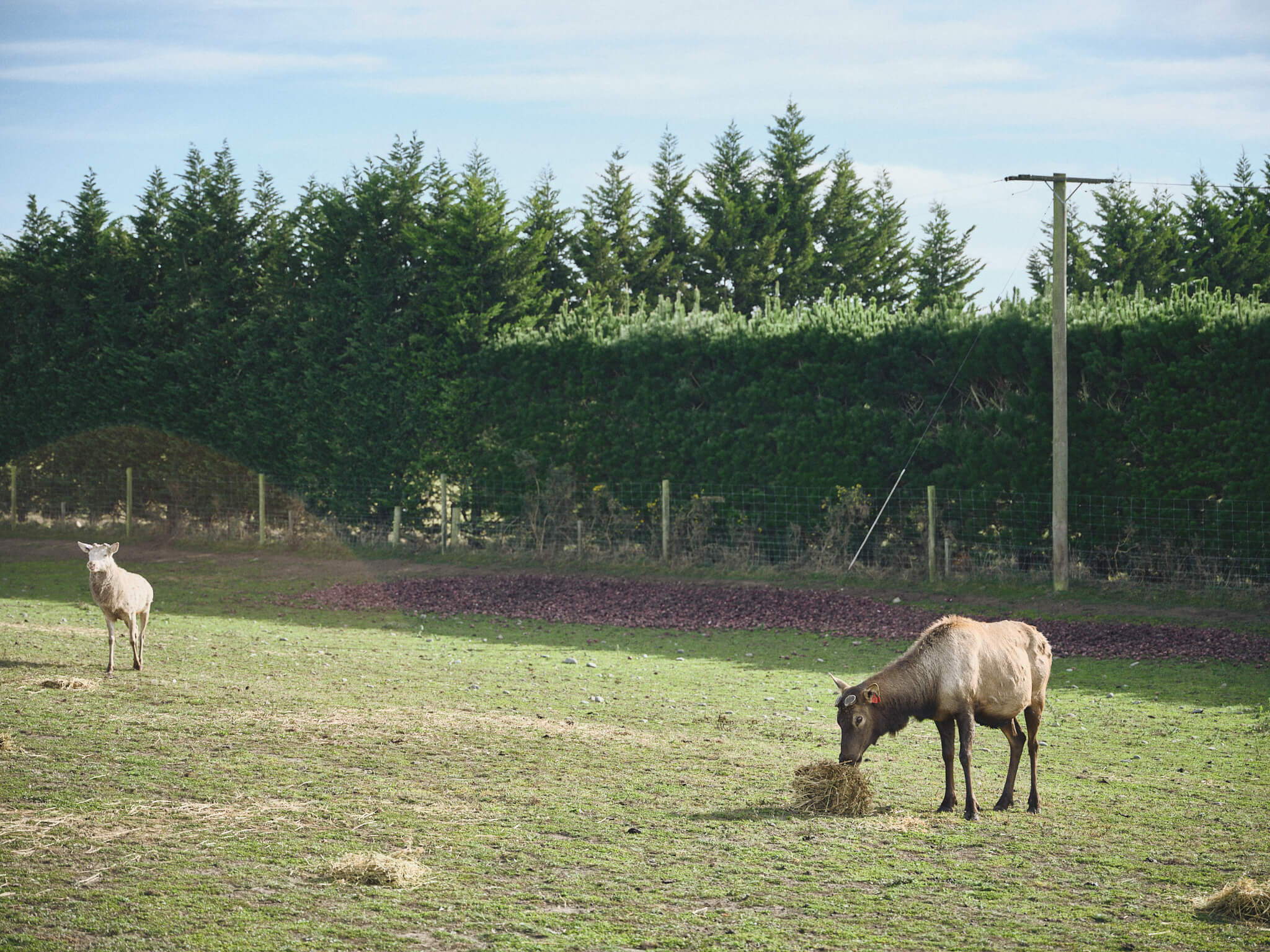
The farm operation covers 40 hectares and runs 120 velveting stags and around 100 hinds, which breed replacement velveters. They also run hybrid weaners, which are finished for the works. It’s a system that balances breeding, finishing, and velvet production, with every part of the herd playing a defi ned role. For David, it’s never just been about stock numbers or output. It’s about understanding the animal, and building systems that reduce stress and improve outcomes across the board.
David traces the beginnings of his business back to a personal connection that sparked a long-term shift in direction. “I got started in the deer industry through my late brother-in-law. We bought our fi rst deer from him and share-farmed them with my father at their small property in Weedons,” he said. “From there, we progressed to buying our own property and then starting to build up our own deer herd, which we have had for 40 years.”
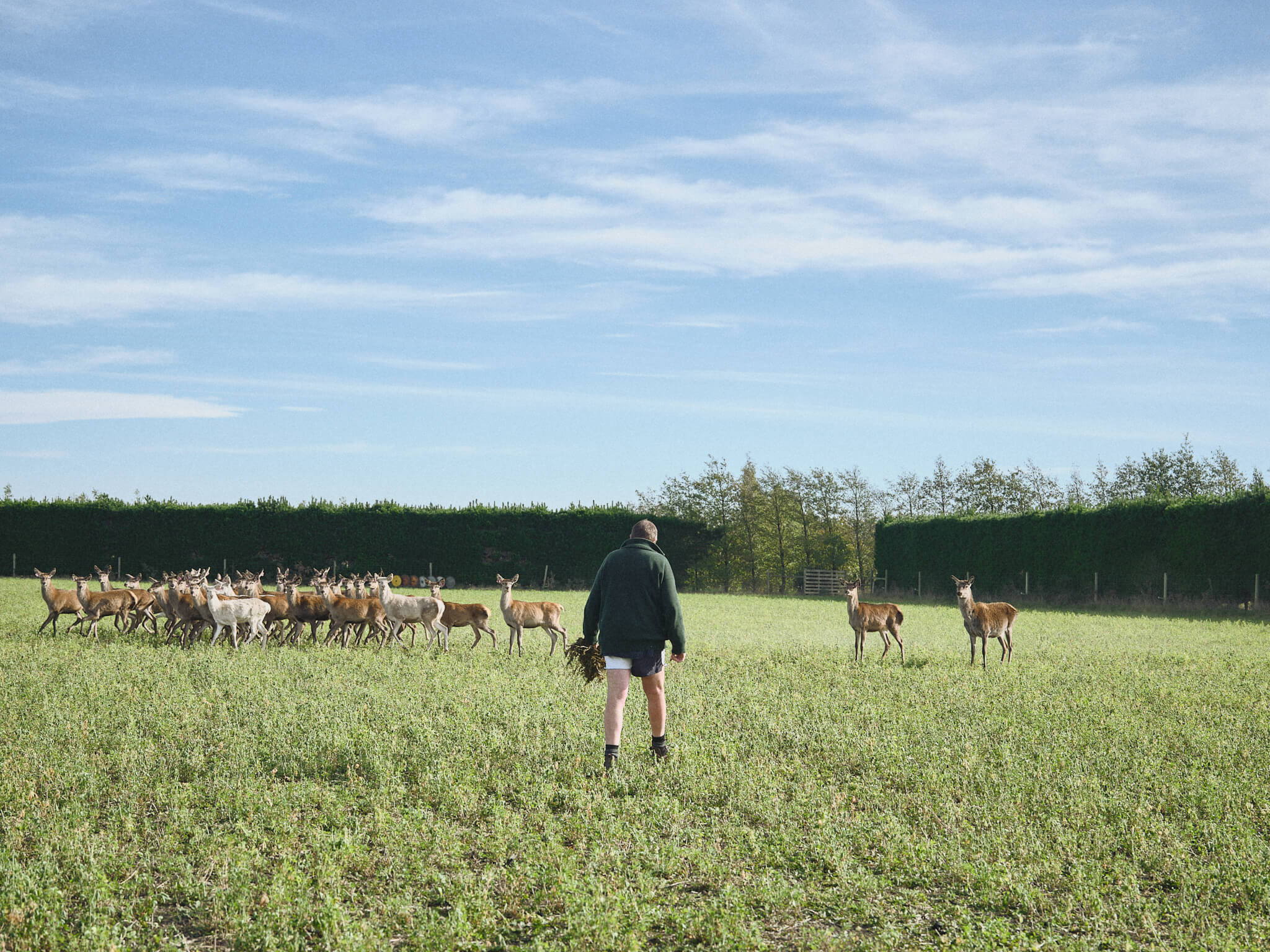
What began as a small shared venture has grown into a dual enterprise spanning both farming and transport, each feeding into the other over time.
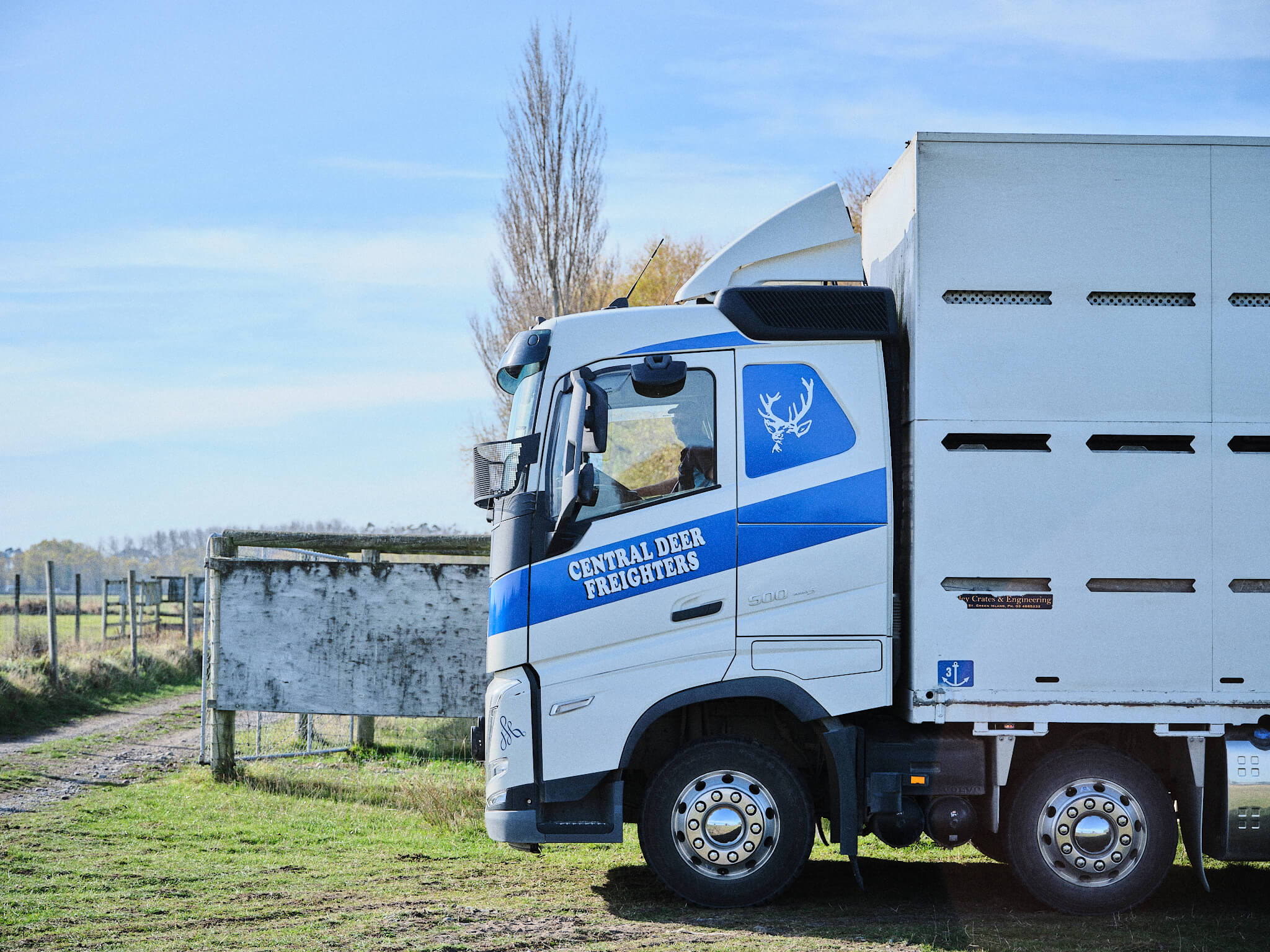
Supporting the wider deer industry, Central Deer Freighters Ltd was established in 1995 after identifying a need for specialised deer transport services.
The business has since grown to a fleet of five trucks and trailers servicing the South Island, with North Island coverage provided through its partnership with Tim Coombs Deer and Stock.
It is a scale that brings its own responsibilities, particularly when it comes to animal welfare in transit. David is clear that transporting deer is not simply a logistics exercise; it requires reading animal behaviour and understanding stress thresholds.
“The health and welfare of the deer is very important to us when we’re transporting, as well as having a knowledge of the stress levels which deer can get into,” he said. “Knowing how they operate, where they’re comfortable, because if you stress a deer, then you’ve got problems. We try to avoid all that by putting them in appropriate pens for long-distance travelling. We then lighten our load for the amount of time they’ve got to spend in the truck.”
“Deer are very, very alert,” he added. “I rate them very much like a horse or a dog. They can sense fear from quite a way off , and if someone’s uneasy around the deer, then they lift their aggression level to match what’s happening with the person who’s handling them. So, if you’re relaxed around them, they’re relaxed around you.”
That philosophy carries through the entire operation: calm handling, consistency, and respect for animal behaviour. “I believe you’ve got to have a passion for the animal to understand the animal, and once you understand the animal, then you can relax around them.”
On-farm, breeding decisions are made with a clear focus on market requirements and structural consistency. David describes a careful selection process for velveting stags.
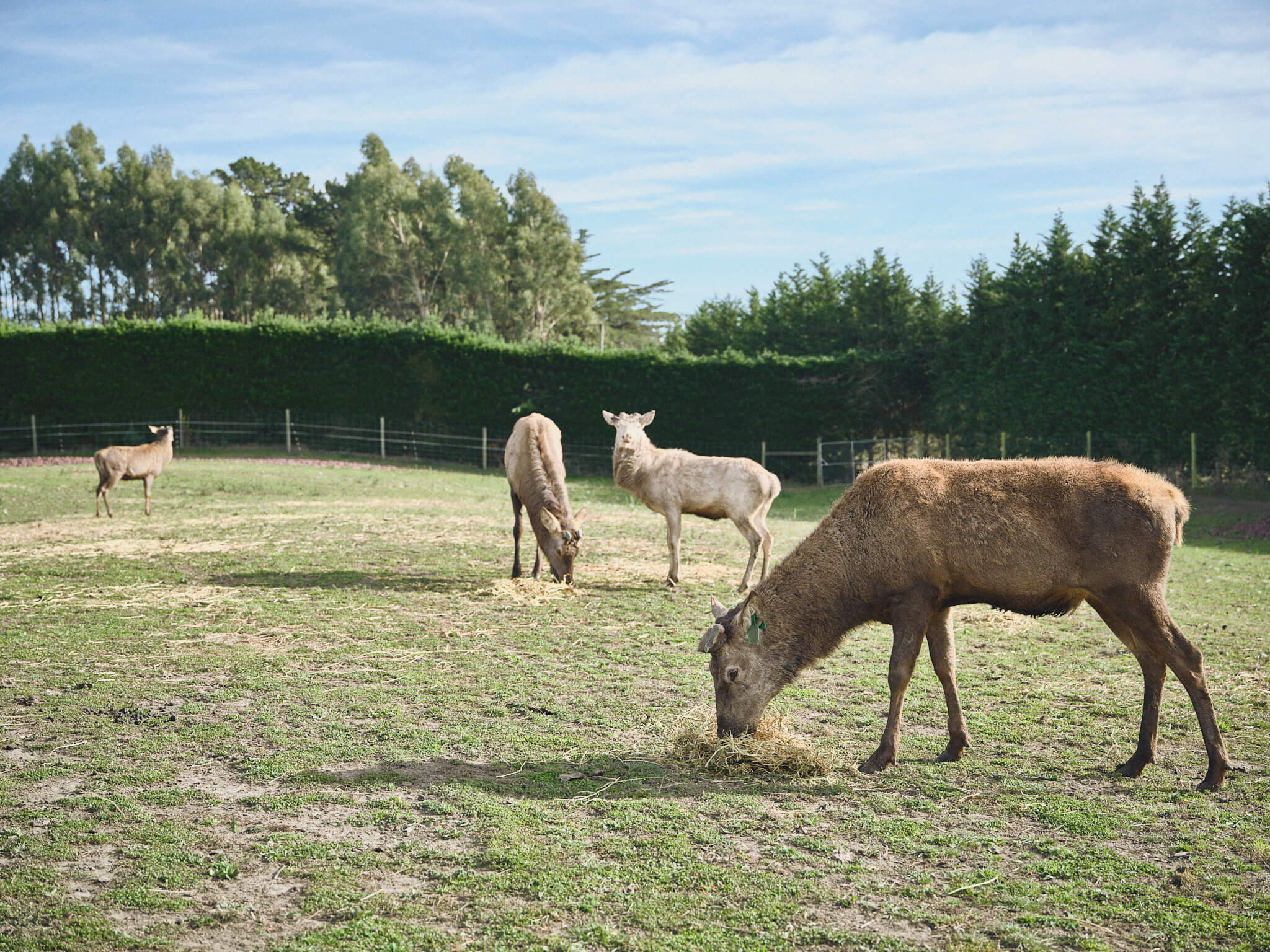
“How we pick our replacements is through looking for a nice traditional head, which is typically round, a little bit of length, but not to go over the 50 to 55 centimetres, which the market requires,” he said. “We try to avoid anything that’s non-typical, because the non-typical velvet is the one that we’re getting penalised on.” Roughly half of each season’s progeny are retained for herd replacement, with the remainder fi nished for processing.
Alongside the core farming operation, signifi cant investment has been made into developing specialised deer genetics. Over the past decade, the herd has been steadily strengthened through the acquisition of pure German bloodlines from sales across New Zealand – in fact, around 70% of the herd now carry these genes. These animals are valued for their dual-purpose qualities, offering strong performance in both venison production and traditional velvet farming. The operation has also established a breeding programme for white deer, which are highly sought after by trophy hunters and collectors.
Another signifi cant shift in recent years has been the move into value-added processing. Rather than relying solely on external buyers, the business now processes part of its velvet output in-house.
It’s a vision that extends well beyond seasonal schedules and annual production targets. Through an initiative known as Criff el Futures, Mandy and the wider team at Criff el Station have been exploring what agriculture could look like decades from now, building partnerships with organisations in Singapore and seeking solutions to challenges facing future food systems.
A percentage of our velvet gets sold to a road buyer, and the rest of it we actually process down into velvet capsules and market from home,” David said. “We’ve decided that that is probably where our best avenue is; we’ve processing for 15 years now, and getting good results.”
Like many specialist deer operations, timing and nutrition are critical to performance. David is pragmatic about feed planning and seasonal preparation, feeding fodder beet in winter. The production window is tightly defi ned. “Once the stags lose their buttons, which they call the button drop, within a maximum of 60 days you would expect to be cutting.”
For David, sustainability is increasingly about control of process and product. “I think one of the biggest sustainability changes we’ve made is by going down the track of processing our velvet through to a finished product, so that we’re only accountable to ourselves,” he said. “We’re not reliant on the market to deem what they’re going to pay us.”
Looking ahead, David remains optimistic about the wider deer industry, particularly as consumer awareness grows. “I think the future for deer farming is really positive, because everything to do with deer is good. The meat is really good, it’s really healthy,” he said.
What is needed, he believes, is education - particularly around velvet, its uses, and its potential benefits, including support for joint health, recovery, and general wellbeing. “We just need more education on velvet within New Zealand and in European countries so people understand the good things it could do for them.”
For David, Gwenda, Cameron and Central Deer Park, that education begins at home, in a system built slowly over 40 years, where animal behaviour, family labour, and practical innovation continue to shape a distinctly Canterbury approach to deer farming.