


Goldpine
Vines on High Ground: Hawkes Ridge Vineyard, Hastings
Hawkes Ridge sits high above the Mangatahi plains, tucked under the lee of the Raukumara ranges. At roughly 200 metres above sea level, it is one of the highest vineyards in Hawke’s Bay - a fact that shapes everything that happens there. As Douglas Haynes, owner of Hawkes Ridge, showed us around the stunning property, the dedication, hard work, and passion that went into cultivating the vineyard and olive grove are evident.
When Douglas and his wife Julie, alongside his parents Bob and Carolyn Armstrong, started with the initial olive grove plantings in 2001, they had no idea how much the business and passion would grow. Being a family-run business that has evolved steadily over the past 25 years, it has cemented itself in the hearts of local and international wine fans, with a popular cellar door and wine club. The property covers around 73 acres, with about 60 of those split evenly between vines and olives. The homestead, architecturally designed to look like a home from western USA and small on-site winery and cellar door are tucked neatly into the landscape.
The business began with a desire to leave Auckland and do something different. Douglas’ parents had been living overseas, and the move south was as much about bringing the family back together as it was about starting a new venture. Olives came fi rst. Around 35 acres were planted, with the long-term view that it would take years before there was any real return.
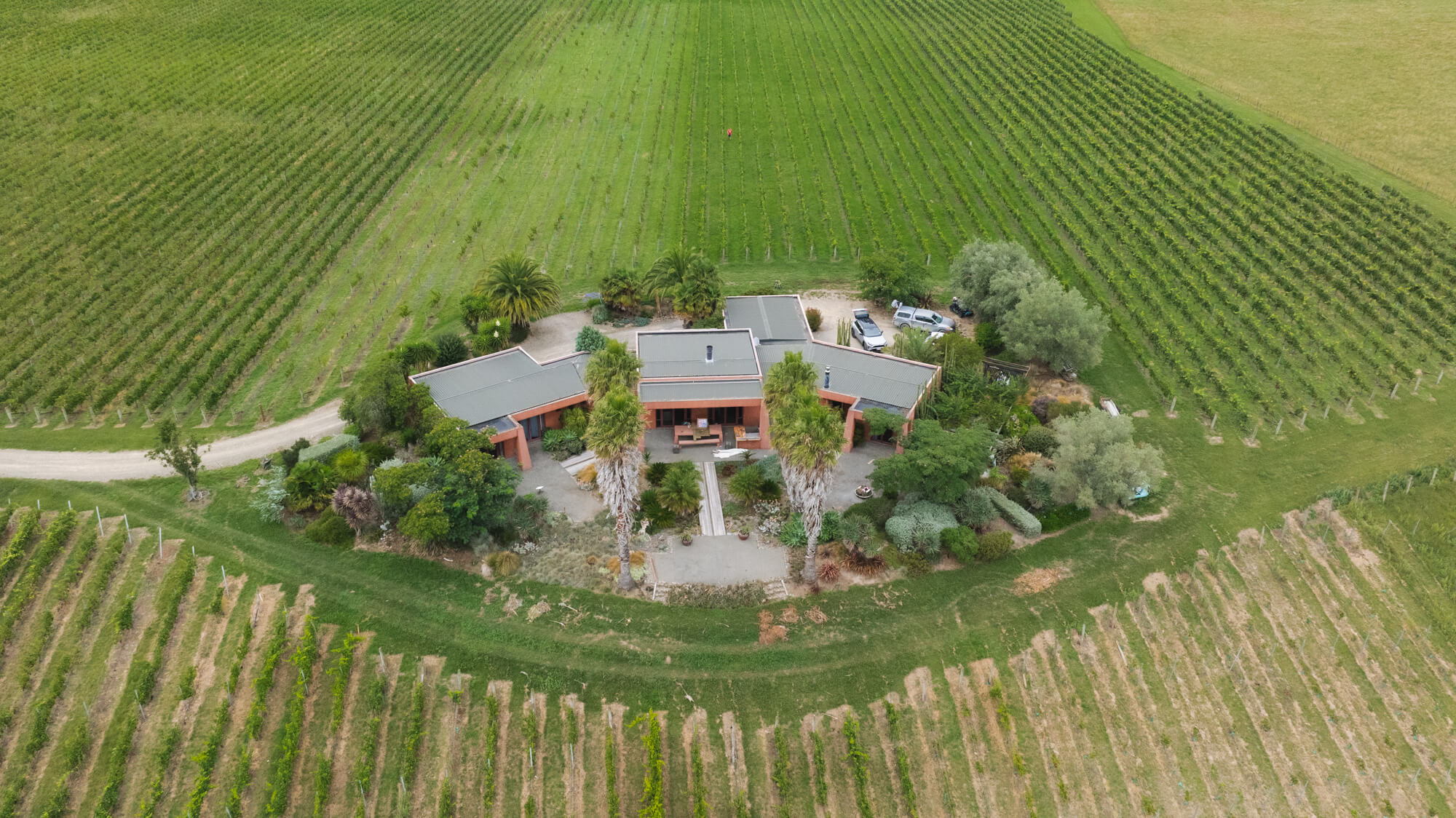
“Once the olives were in, we looked up and realised we were right in the middle of a really interesting wine-growing area,” Douglas said. “So we bought a bit more land and put the vineyard on the top terrace.”
That elevation matters. Hawkes Ridge is technically a cool-temperature vineyard by Hawke’s Bay standards, with large diurnal shifts between day and night temperatures. The site includes a steep, north-facing drop of around 60 metres, which absorbs heat and helps shape the character of the red wines grown there.
It also makes irrigation and water supply a challenge, Douglas said. “We had things tested and thought we’d ticked all the boxes in terms of water supply when we decided to buy the property. Turns out it was enough water to feed sheep, and that was about it.”
Over the years, Hawkes Ridge has developed a broad mix of varieties, chosen largely on preference rather than market demand. The vineyard includes Sémillon, Pinot Gris, Pinot Noir, Sauvignon Blanc, Chardonnay, Viognier, Tempranillo, Syrah and Grenache, with newer plantings still coming into production.
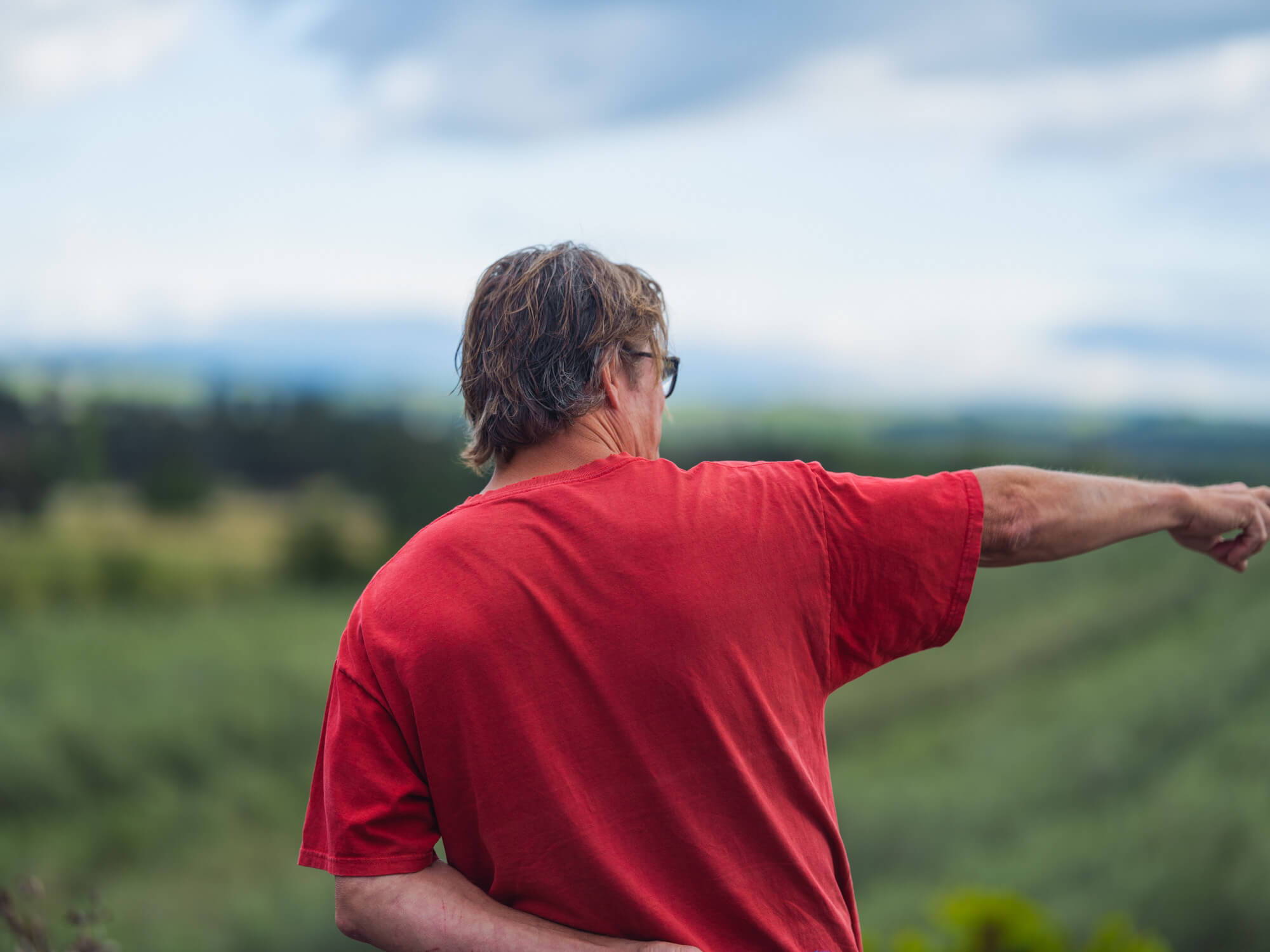
“We picked varieties based on what we liked,” Douglas said. “That was probably a silly thing, but it’s worked so far.”
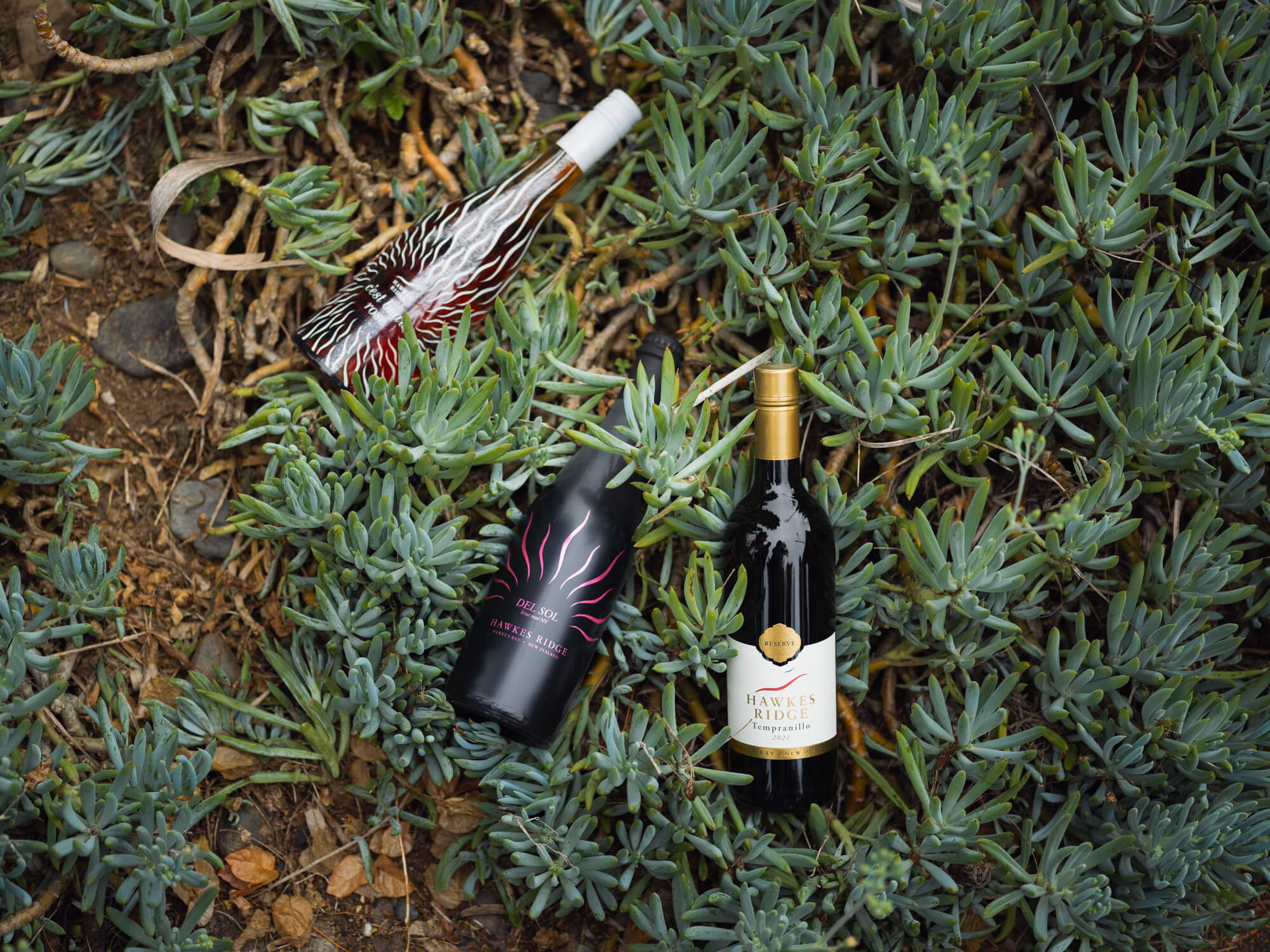
The diversity allows flexibility in the winery. Sémillon is made both as a straight varietal and blended with Sauvignon Blanc, while also forming the base of Hawkes Ridge’s sparkling wine. Pinot Noir appears in still wines, sparkling and even dessert styles. Viognier is used for aromatics and dessert wines, while Grenache has found a natural home as a Provence-style rosé.
One of Douglas’ favourites is Tempranillo. “It’s rich, complex, and really enjoyable to work with,” he said. “We like playing around with it.”
All wines are made on site in a small winery built behind the cellar door. The building began life as a custom-made Goldpine shed, designed with drainage, insulation and practicality in mind. Wool insulation helps regulate temperature naturally, meaning the winery rarely exceeds 20 degrees even when summer temperatures climb outside.
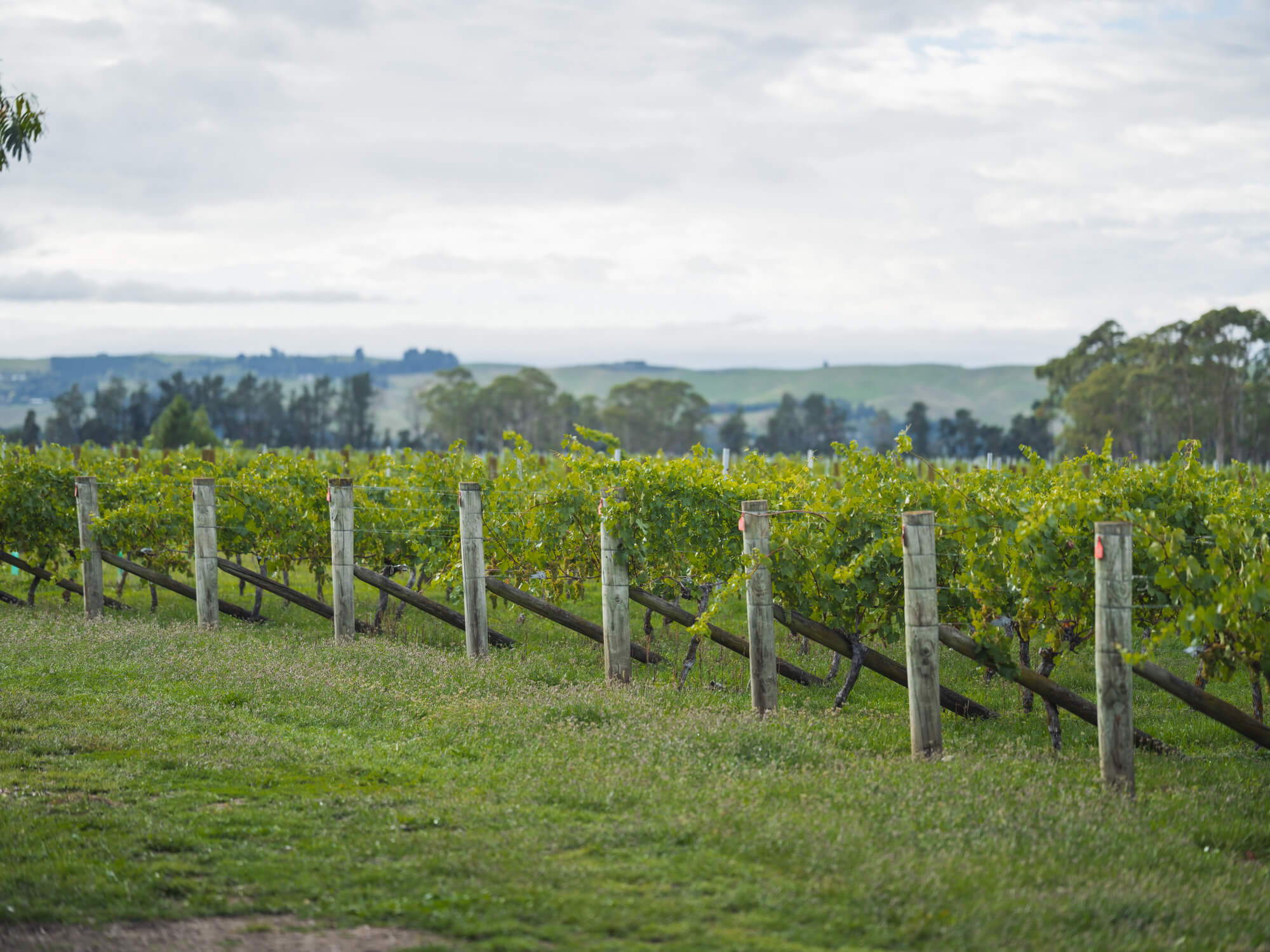
Much of the work across the property is hands-on. Douglas does the majority of the vineyard work himself, including tractor operations and winter pruning. As vines age- many are now over 20 years old- more time is spent on redevelopment and reconstruction, tailoring decisions vine by vine rather than applying blanket solutions.
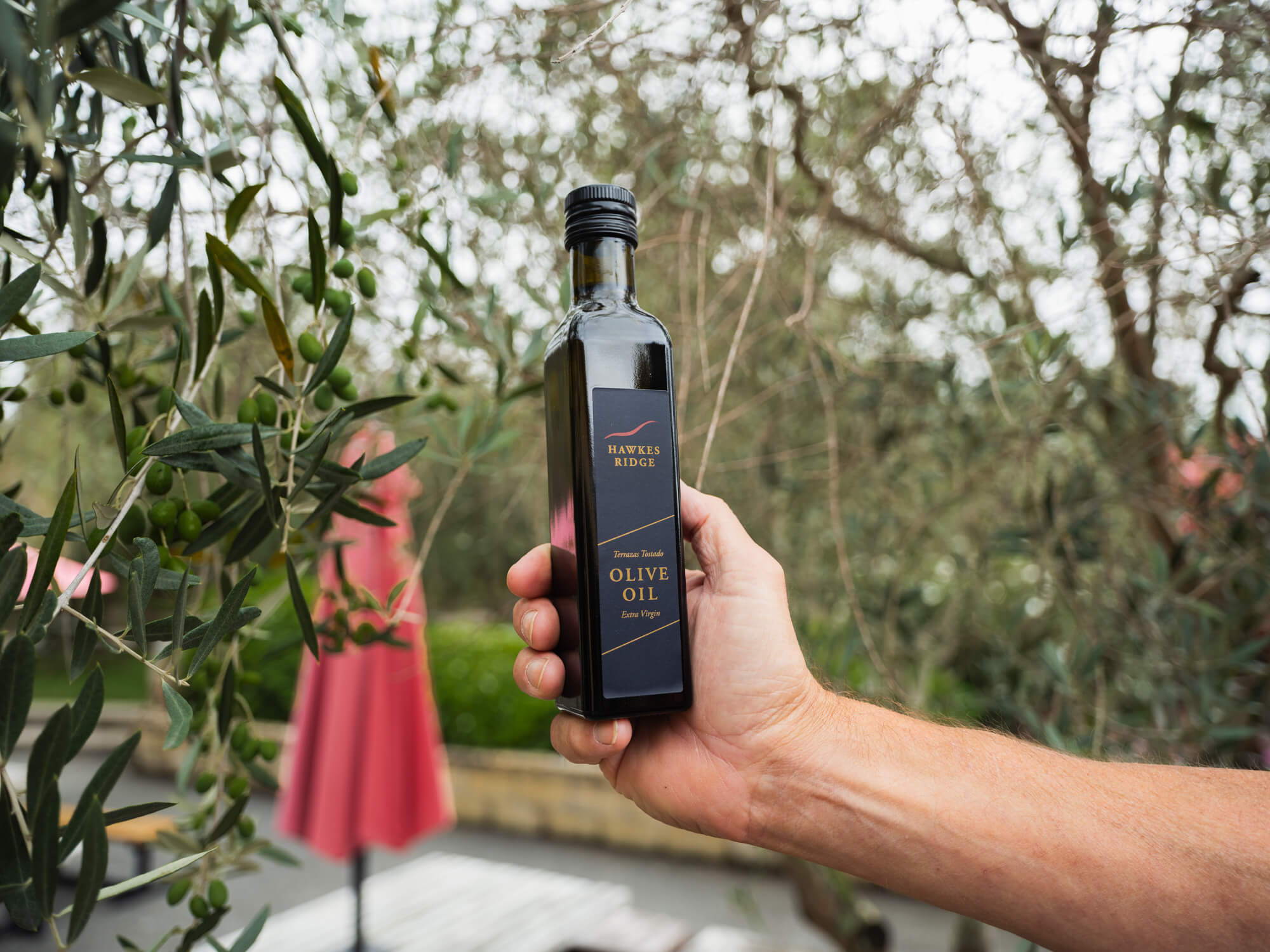
The cellar door is supported by a small local team, including students from the nearby school. The business is deliberately structured to avoid reliance on any single income stream. Alongside wine sales, Hawkes Ridge sells excess grapes and operates a cellar door. A loyal wine club provides repeat business, supported by steady, personal relationships rather than aggressive sales. The approximately 30 acres of olive trees produce olives which are sold to Village Press, with a small number also being turned into Hawkes Ridge olive oil.
That balance between work and enjoyment is central to how Hawkes Ridge operates. There are busy periods and stressful ones, but there is also time spent moving slowly through the vineyard on a tractor, phone switched off , letting the pace of the land set the rhythm of the day.
Sustainability, at Hawkes Ridge, is approached as a long-term responsibility rather than a label. When the property was fi rst purchased, the soil had high pH levels and little biological life. Improving it became essential.
“It’s where we live,” Douglas said. “Where our kids played, where people work. You want it to be safe, healthy, and still here in generations to come. It’s not about ticking boxes. It’s a continual process.”
The focus has been on building soil health through organic matter, fungi and mycorrhizae, while minimising harm where chemical inputs are unavoidable. Weed spray is used selectively, with eff orts made to off set its impact elsewhere. Gardens, native plantings and diversifi cation across the property help soften what could otherwise become a monoculture.
That philosophy was tested during the extreme weather events that have affected Hawke’s Bay in recent years. Although Hawkes Ridge avoided direct flooding, water pouring off surrounding hills caused major damage. The cellar door had to be rebuilt after water backed up more than a metre deep, and parts of the vineyard suff ered root damage from prolonged saturation.
During the fl oods, power was lost, roads were cut, and the property was temporarily isolated. When electricity returned days later, Douglas reopened the cellar door almost immediately - not for profit, but for sanity.
“People just needed somewhere to sit, talk, and process what had happened,” he said.
Out of that difficult vintage came two one-off wines, created as markers of the season and the people aff ected by it. They will not be made again under the same names, but they remain part of Hawkes Ridge’s story.
Looking ahead, the focus is on careful expansion rather than scale. New varieties are coming into production, including Chardonnay and additional Grenache plantings. There is interest in exporting small volumes, and in continuing to experiment with styles that suit the site rather than the market.
“We’ve done a lot of things people said you couldn’t do here,” Douglas said. “Sometimes that’s stubbornness. Sometimes it’s curiosity.”
After 25 years, Hawkes Ridge continues to evolve quietly, shaped by elevation, climate, family and an ongoing willingness to learn. It is not driven by trends or rapid growth, but by the steady work of understanding a place- season by season, vine by vine.