


Goldpine
The Power of Persistence : Jomark Produce, Katikati
When Mark and Jodie Power bought their avocado orchard in Katikati in 2012, they didn’t walk into a turnkey operation. What they took on was land with potential, but trees that were underperforming, unhealthy and in need of serious attention. By swapping the bustling city for fresh air and birdsong, they started down a path full of lessons, and founded a business built on persistence and passion.
The couple moved down from Auckland in the wake of COVID in 2021, after slowly restoring the orchard since 2012. Located in Katikati and now operating under Jomark Produce, the property spreads across two neighbouring blocks totalling around eight hectares.
Between them sit about 450 avocado trees, though more than 100 were removed over time to improve tree health and light penetration. “The avocado trees were already about 12 years old when we bought this block in 2012, but we had to learn fast because they were very sick,” Jodie said.
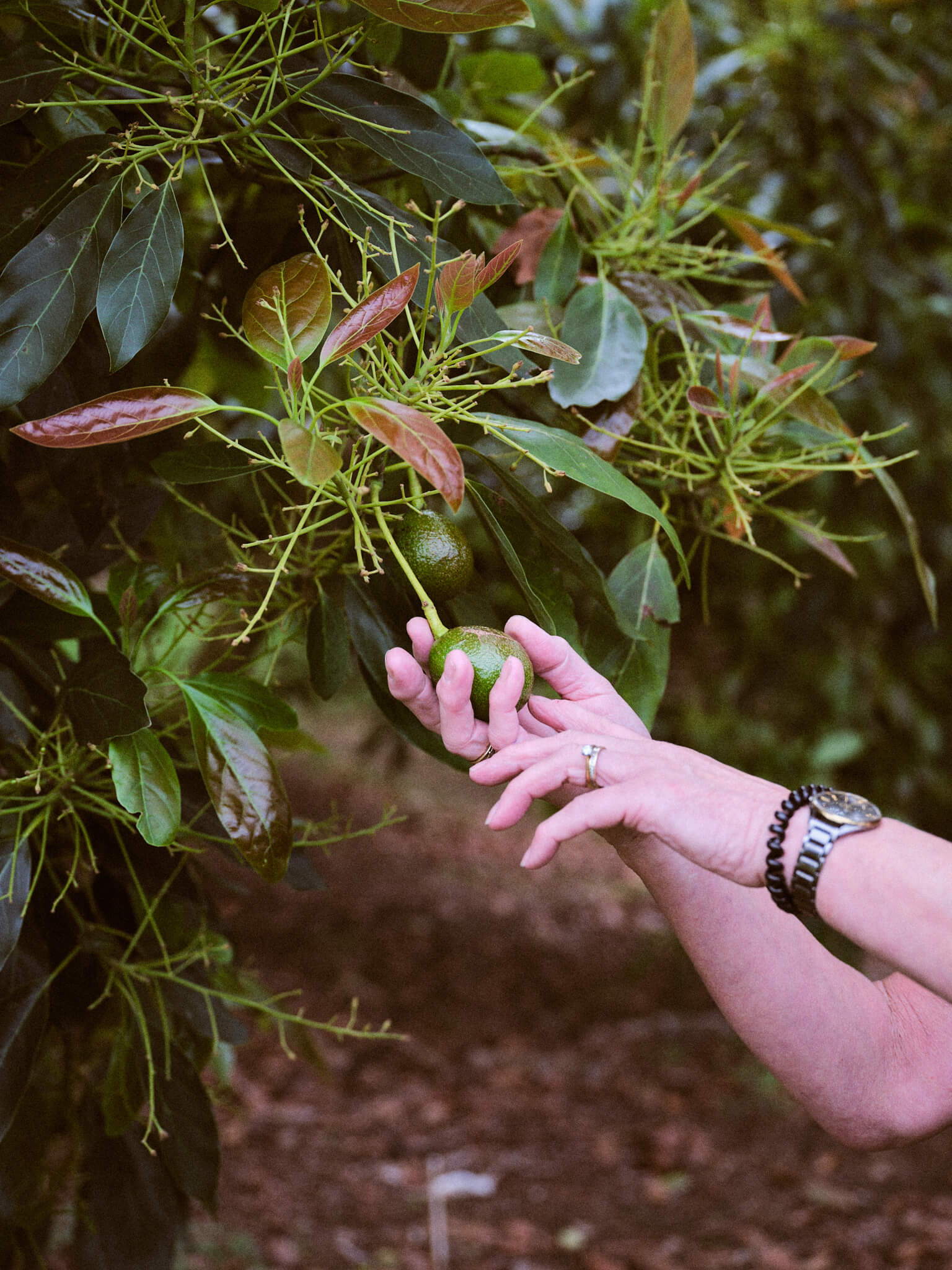
“They had been organically grown, which means nothing had really been done to them. They had been planted close together and weren’t thinned, so they were growing into each other, and there was no light. For the health of the orchard, we had to take at least a hundred out.”
Neither Mark nor Jodie came from a commercial avocado background, and the orchard block in Katikati was intended as a retirement plan – but their passion for the land took over. Moving from Auckland, where they owned a commercial power washing business, the burgeoning orchardists discovered a newfound love for the land and the industry.
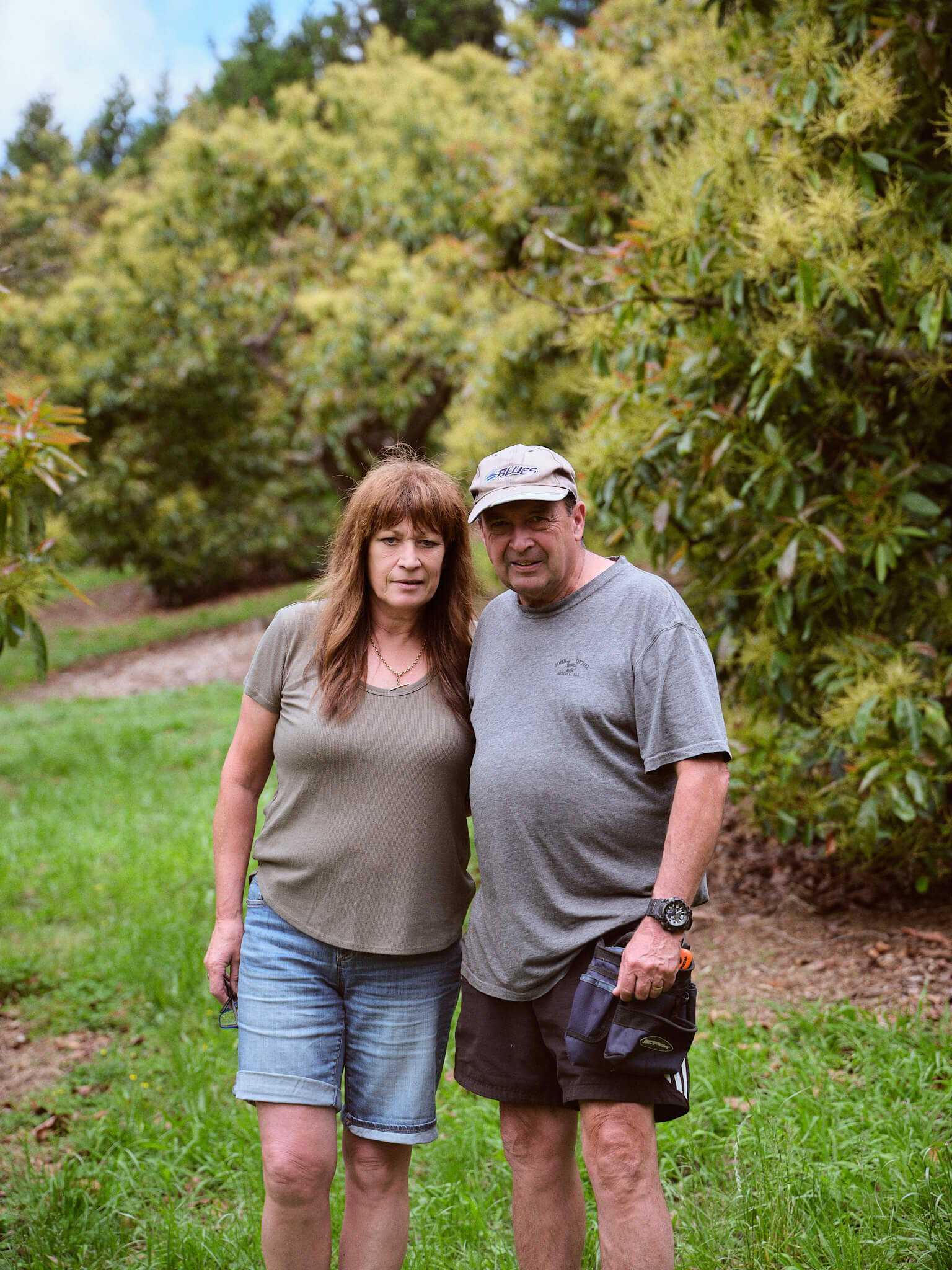
Early on, Mark took on contract work and orchard labour to build his skills. “When I first started helping the contractors, like just pruning and putting the wood into the chipper and doing small jobs like that, it was tough,” he said. “Even though I had a physical job, it’s a different type of work; it’s hard, but I enjoy it.”
What made the diff erence, he said, was the willingness of others in the industry to share knowledge. “All the contractors were happy to teach you anything,” Mark said. “The more I could get down here at the weekends to work and help, the more I learned. The fi tter you get, the more knowledge you gain to the state where you could actually do a lot of that work yourself.” That openness, particularly within the avocado Jodie and Mark Power, owners of Jomark Produce sector, left an impression.
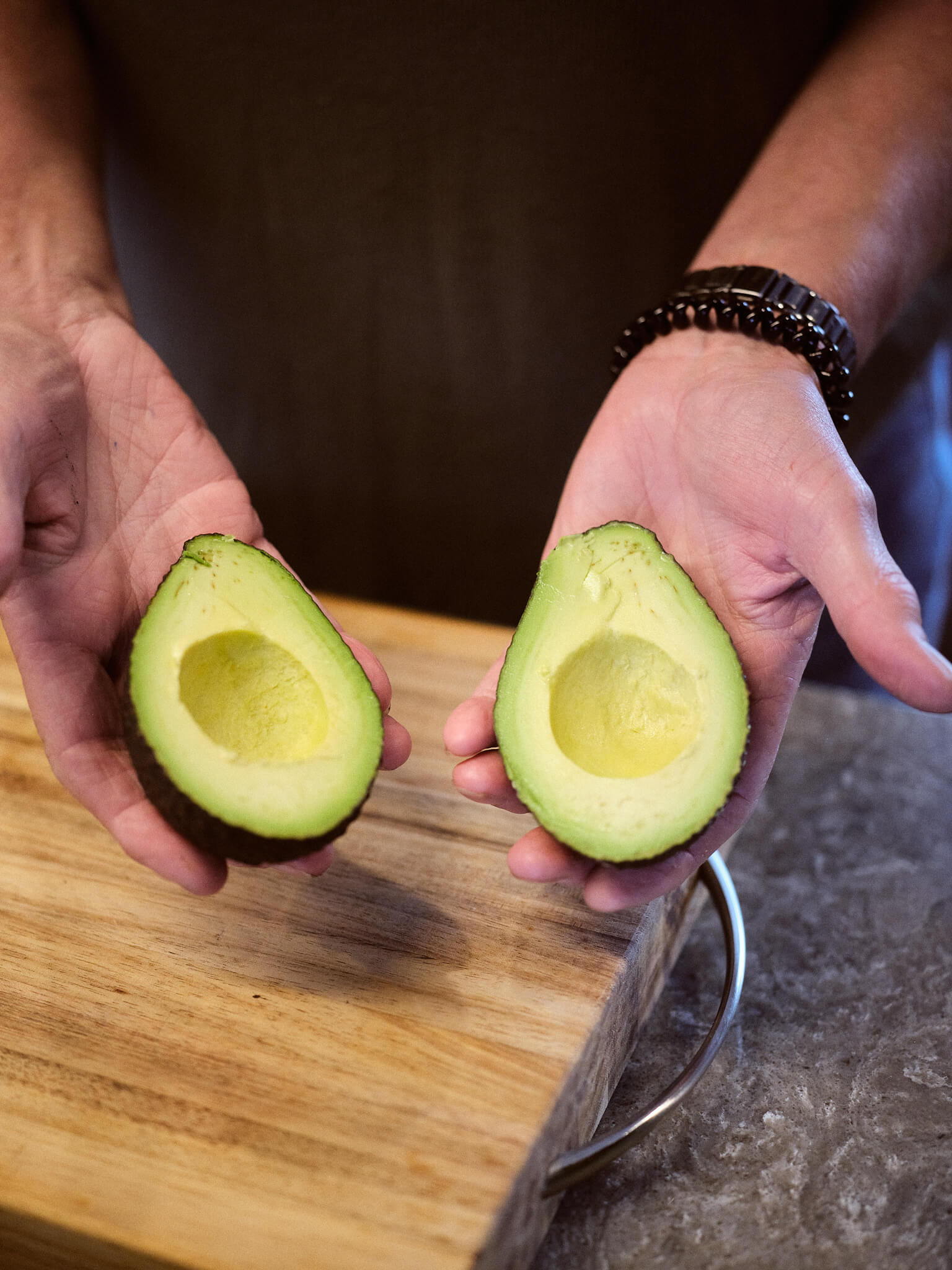
“This is how good the avocado industry is,” Mark said. “They want you to learn because they want to grow the industry. The more fruit that we produce, the better it is for everybody.”
In the early years, the orchard wasn’t commercially viable. Despite having around 150 trees on the original block, production was minimal. “It wasn’t even worth a pick,” Mark said. “So I think we had to wait till 2014 to do our first pick. So it was just work, work, work.”
The biggest issue was tree health. Many were showing signs of phytophthora, a soil-borne root disease common in avocado orchards. “They were very scant looking, they didn’t have many leaves, they were yellow, and they hadn’t been pruned”, Jodie said.
Addressing that took time and money. “It was a big journey to nurse them back to health,” she said. “It was funny, you think something’s really sick so you want to give it some extra fertiliser, but that’s actually not what you do,” Jodie said. “When you’re trying to get a tree back to health, you have to give it time and space to recover with minimal fertiliser.” It took fi ve to six years for the orchard to produce a consistent crop
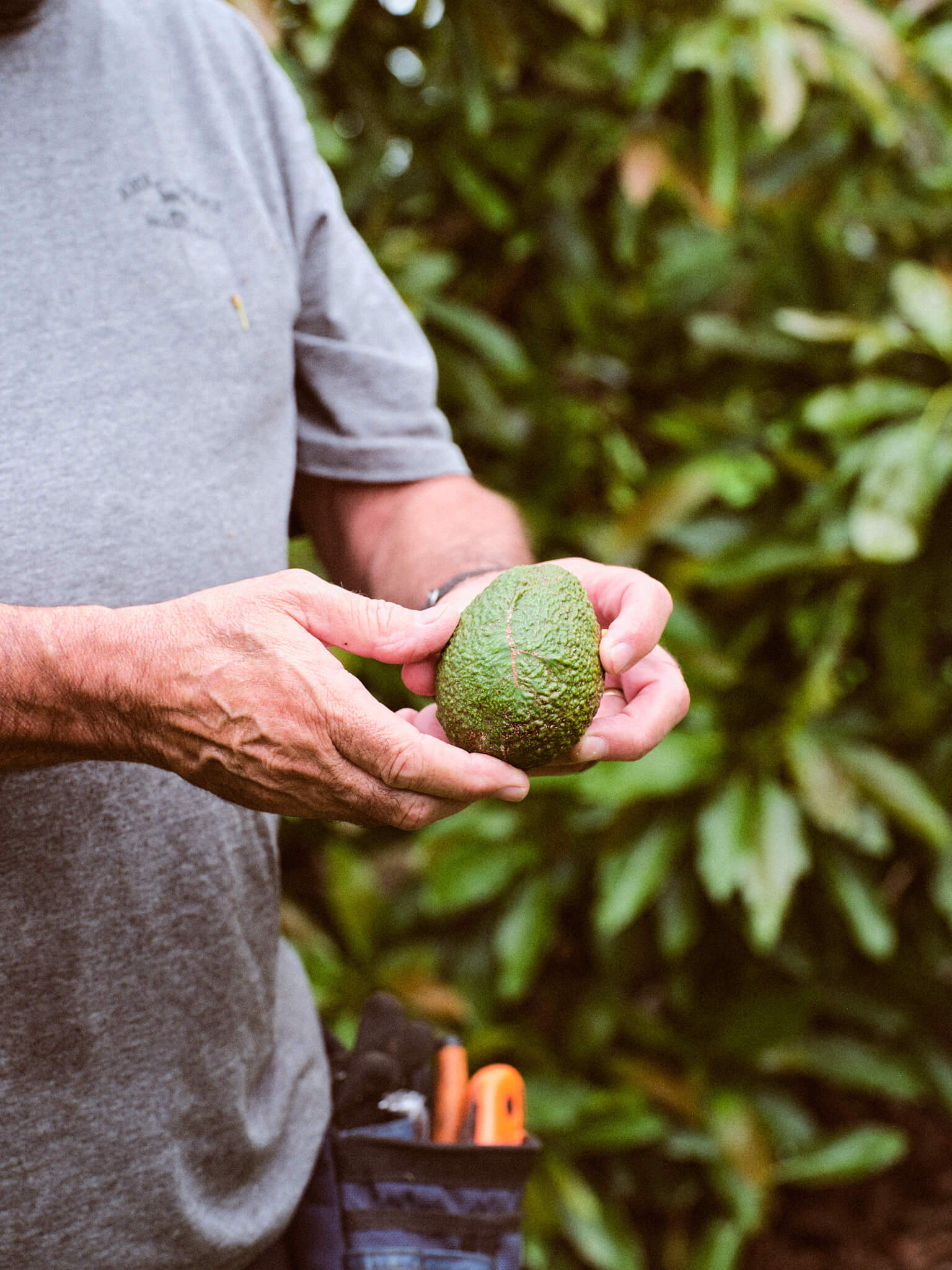
Much of the orchard work is still done by Mark and Jodie themselves. Mark handles mowing and minor pruning, while fertilising is done by hand. “We have a soil and leaf test done, and they send that away, and then they come back and say, well, you’re just lacking this nutrient.” Tree monitoring plays a major role, particularly for pest control. “Every six weeks we’re monitored,” Jodie said. “If it goes above the industry-approved level, it’s recommended that we spray.”
Export requirements, especially for Australia, mean spraying is unavoidable when thresholds are exceeded. Still, the Powers are as conservative as they can be when it comes to their orchard. “We don’t spray unless an industry-approved threshold is met,” Jodie said. “Even if it’s borderline, we might do another monitor in two weeks’ time to determine if it’s actually really necessary.”
Picking is contracted out due to scale. Export markets vary year to year, with Australia historically taking the bulk of New Zealand fruit. “Generally, eight out of ten of our avocados go to Australia,” Mark said. Other markets include Canada, China, Japan, Southeast Asia and the United States. “The avocado marketing team are always out there looking for new markets,” Mark said.
COVID forced a reset; shipping restrictions limited export volumes, even during a good crop year. “We could only pick 21 bins at a time,” Jodie said. “So we realised we had to look at other things to grow on the orchard.”
That prompted diversification. Finger limes, tamarillos, citrus, herbs and dried fruit products are now trialled across diff erent parts of the property. “We’re just experimenting,” Jodie said. “Anything we can think of to do something a bit different and see how it goes.” Some of their produce is sold directly through Mark’s website https://purewatercleaning.co.nz/ and local markets, and the rest is exported.
On farm, the couple have done what they can to protect the land and its future. Environmental management is practical rather than ideological, with over 500 flax plants established around waterways and steep areas. “They’re fast growing, thick,” Jodie said. “They form a shelter belt sort of barrier for environmental protection and safety.”
Flax planting has also helped restore birdlife. “It’s amazing how that’s attracted the birds back,” she said. “We have tūī, kingfishers, wood pigeons, and fantails now frequenting the property. It’s so special to hear and see them.”
For Mark, the appeal of the orchard is in the daily rhythm. “On a summer’s evening, just walking through the orchard and there’s no wind- that’s my favourite thing,” he said.
You’ve got the dogs running around…it’s quiet. All you hear are the cows and the birds. Moving here is the best thing we’ve ever done. We love it, and the more love you put into the tree and land, the better quality fruit you’re going to get.”
For Jodie, it’s the land itself. “I love sitting and watching the birds and hearing the cows,” she said. “It’s a really peaceful existence.”
Looking ahead, the plan is simple. “See what grows well, where it grows well, and what markets we can find,” Jodie said. “The first step is just to get our ideas and get some plants in the ground.” For the Powers, the orchard isn’t just a business, it’s work, learning, and steady improvement - done one tree at a time.