


Goldpine
The Apple of Our Aisle : The Yummy Fruit Company, Hawkes Bay
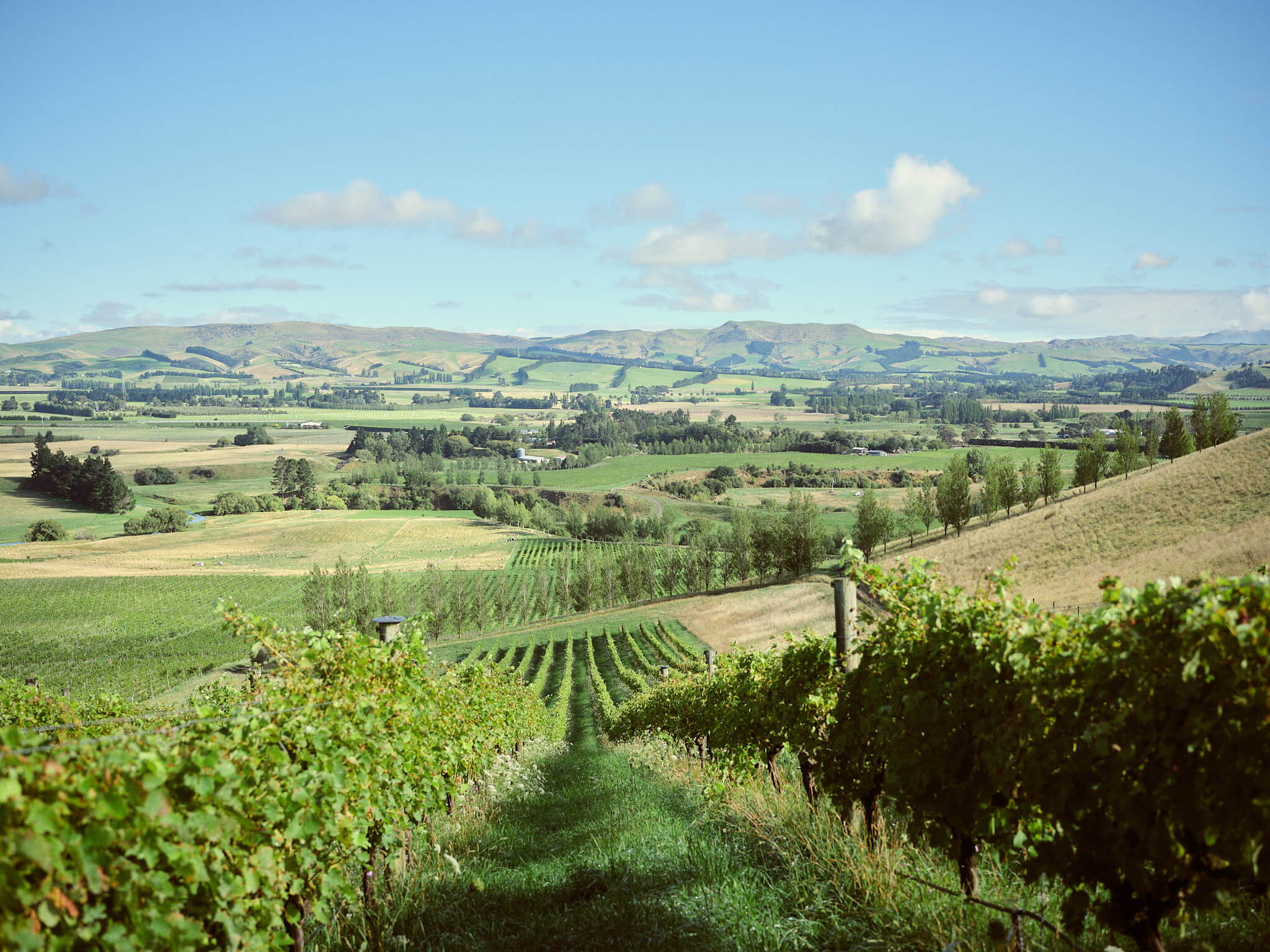
The sun rises over the orchards outside Hastings, lighting up the many rows of apple trees that extend toward the horizon. Trucks move between blocks, pickers spread through the rows, and inside the pack house, fruit begins its journey from branch to box. This is The Yummy Fruit Company — a fifth-generation family business built on resilience, innovation and an unwavering commitment to quality.
For Paul Paynter, the story of The Yummy Fruit Company didn’t begin with him, or even his father. It began more than 160 years ago. “My family started fruit growing in Stoke, Nelson, in 1862. We moved up here in 1904 and my grandfather bought this bit of land we’re on now in the 1920s.”
It was Paul’s father, John Paynter, who would make the bold move that defined the business. “My dad was a mad, enthusiastic fruit grower and decided, with his partner, to create a brand called Yummy nectarines in 1974. That was the birth of the Yummy brand,” he said.
At the time, branding fruit was a radical idea. Produce was largely sold as a commodity, indistinguishable from one grower to the next; but the launch of Yummy nectarines, bright yellow-fleshed and carefully differentiated, changed that.
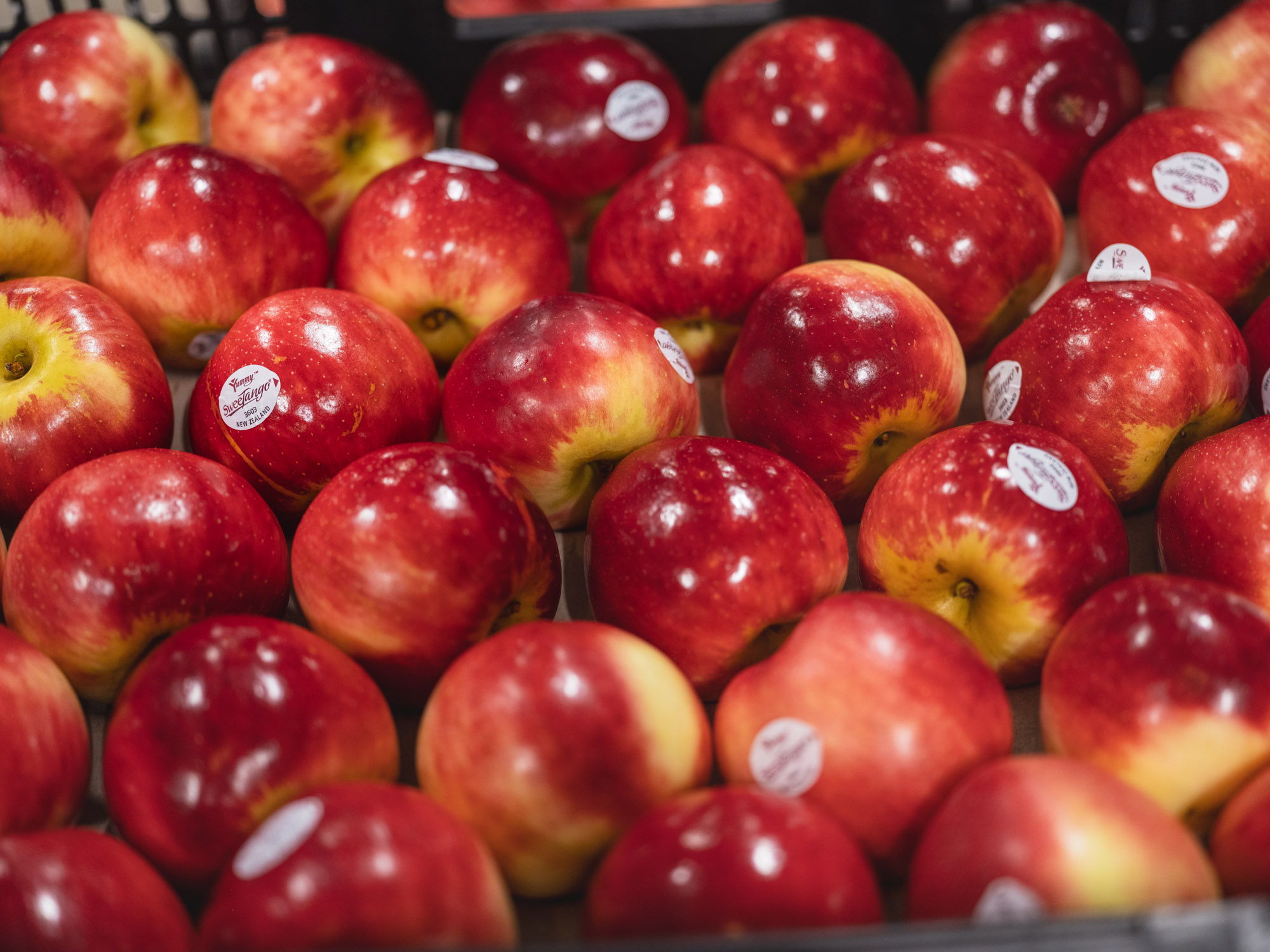
In 1975, they went one step further. “In terms of fruit labelling, I think we’re the first people in the world to ever label fruit. Before that, they stamped some citrus, but labelling wasn’t done,” Paul said. The iconic Yummy logo stickers are stuck onto each piece of fruit, and are now recognised as a household brand. The success of this idea is obvious. “People said, ‘Really? Is that the best marketing idea you ever came up with?’ Yes, it was, because it differentiates yourself in a commodity business.”
Today, that small sticker represents far more than a name. It’s a direct line to the consumer. “When they peel that label off these days, we’re super accountable. They recognise the brand as soon as they bite into the fruit. They’ll go straight to social media and tell you if you did a great job or not. We love that relationship with the consumer.”
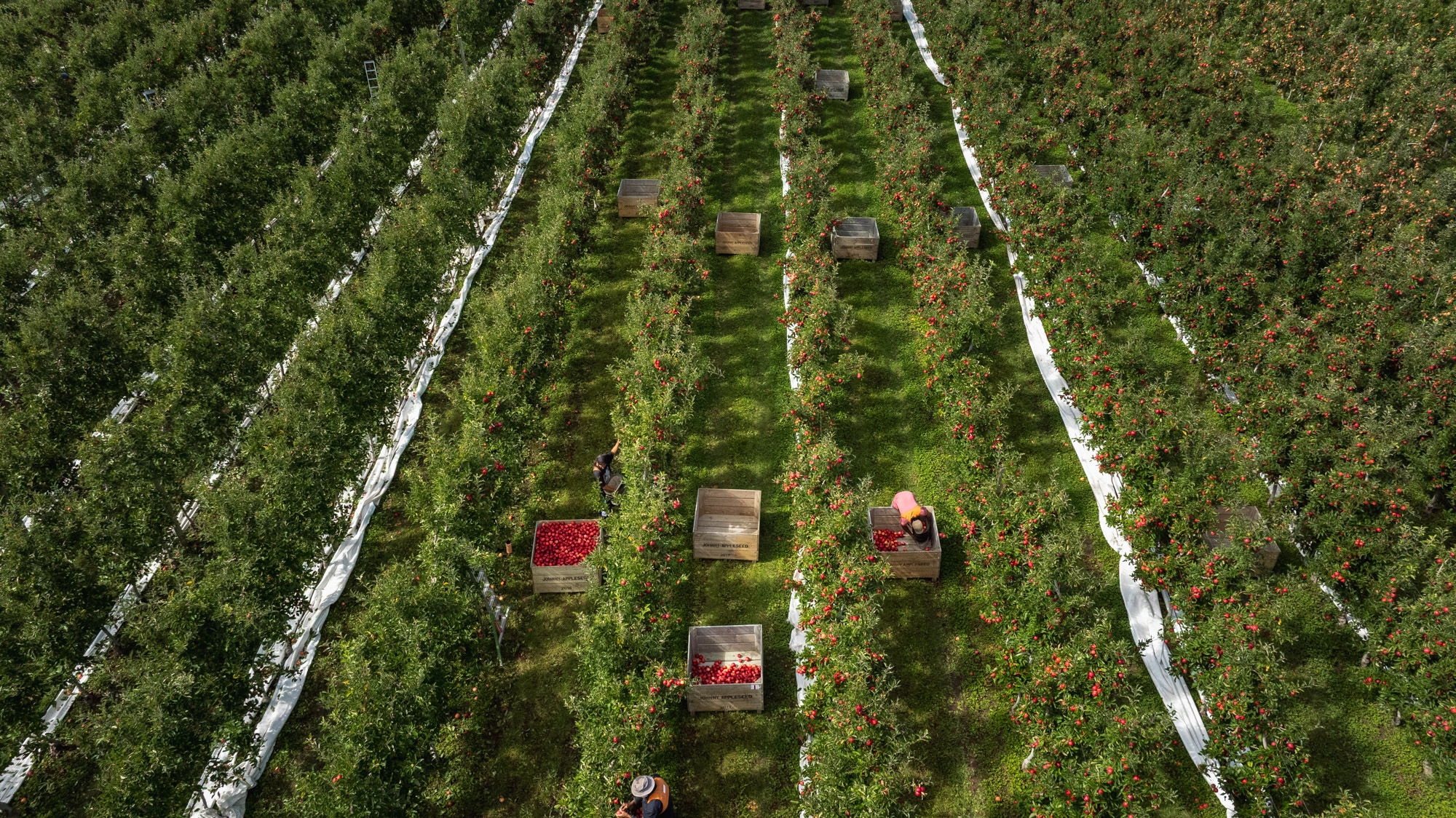
From those early nectarine blocks, the business has grown significantly. The Yummy Fruit Company now operates around 50 orchards covering approximately 650 hectares, and that’s after losses from Cyclone Gabrielle. In total, there are around 800,000 trees producing roughly 25,000 tonnes of fruit annually.
Apples make up about 85% of the business, with stone fruit accounting for the remaining 15%. More than 70% of that fruit is sold right here in New Zealand. “That connection with the consumer is really important to us,” Paul explained. “What makes the business exciting is not standing at the farm gate, but getting all that feedback on social media and being connected with people in your community.”
That community connection extends beyond supermarket shelves. For 29 years, Yummy has run its Apples in Schools programme, encouraging students to collect Yummy labels in exchange for sports equipment. "It funds sports equipment for schools and builds our relationship with the next generation of consumers.”
While the brand is well known, Paul himself is less concerned with titles. He described his role at the company as “odd jobs”, despite being the CEO. Being interested in philosophy, poetry and good with numbers, he hadn’t originally planned to return to the orchard.
“I didn’t want to go into business with my father, so I thought I’d become an accountant. Realised that was tedious,” he admitted. “I wandered around university in a dysthymic malaise, but I ended up back here - it’s dynamic and it’s addictive.”
Quality remains the driving force behind everything they do. “We’re probably most famous for quality and for service. If you get something that’s really good, if it’s inspiring, if it’s transcendent, people want more. Subsequently, that’s our job, to really shoot for the stars and deliver a great experience,” Paul said. “We love what we provide in terms of providing high-quality fruit to consumers. Apples are a perennial crop; it’s just a beautiful thing, natural products, and there’s a lot of nutritional benefit in apples. It feels good to provide that to people.”
Maintaining that quality is no accident. From soil health to pest management, sustainability is embedded in the operation.
“As fifth-generation fruit growers, sustainability is critically important. You need to keep the soil health right because you’re building a platform for the next generation.”
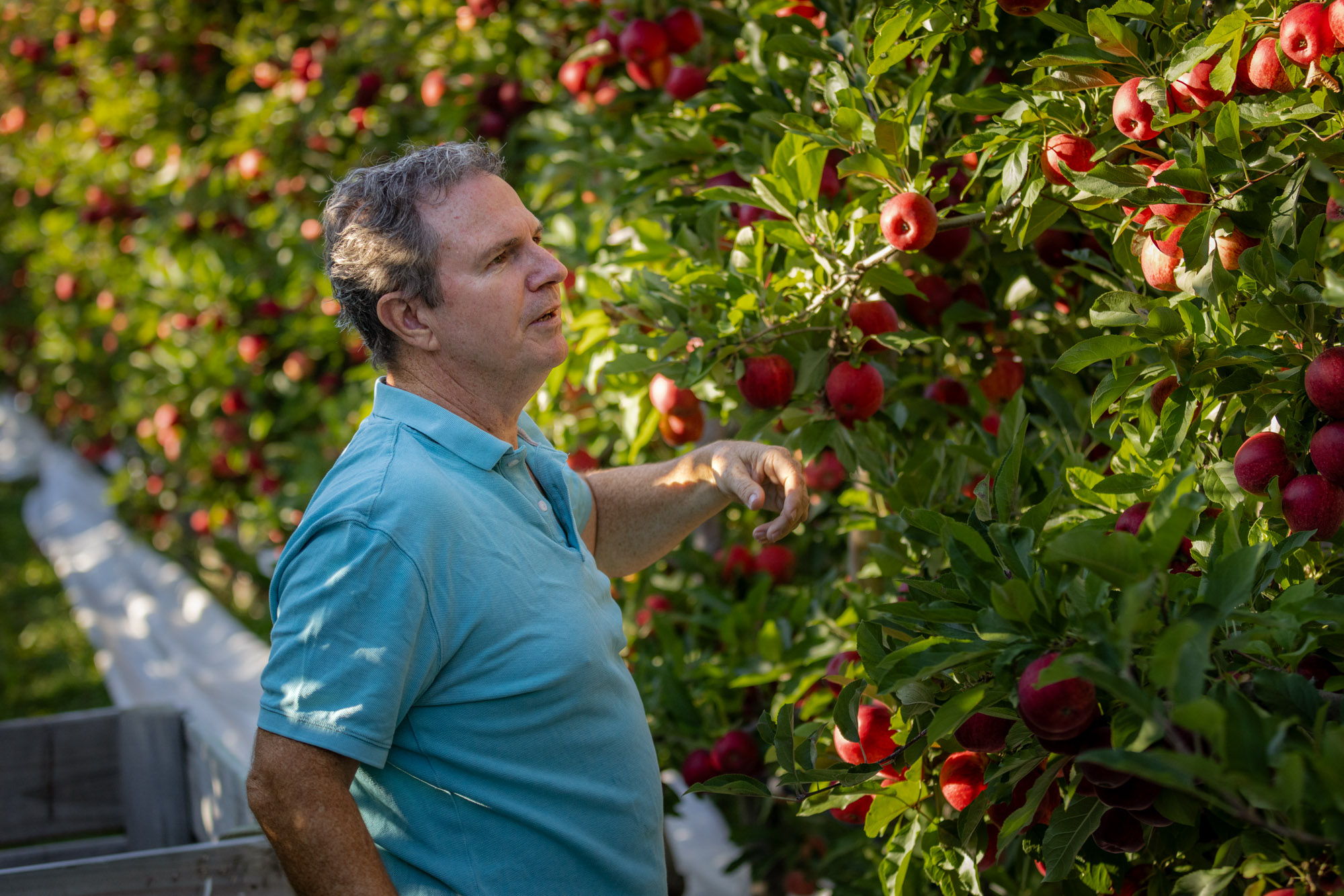
Over time, their approach to crop protection has evolved. “We used to try to kill bugs. Now we work with disrupting their life cycles, trapping them and monitoring populations, using predator insects and antagonistic systems. However, nature isn’t always balanced.”
Nature has also delivered some of their toughest challenges. “The number one challenge is we’ve got the roof off the factory,” Paul said, referencing the realities of outdoor farming. Cyclone Gabrielle devastated the orchards, wiping out more than 180,000 trees and causing an estimated $20 million in losses. “It almost killed us. That’s unsurvivable for a family business.”
Yet what followed was something remarkable.
“One of the great things that came out of it was the community spirit. People were really compassionate to each other. A lot of people did work for free, helping us and others in the region get back on our feet. It’s like this latent love that appears when people see tragedy and someone needs help.”
Survival, Paul says, has come down to grit and the resilience of their team. At peak season, Yummy employs up to 600 people, creating what he describes as a diverse workplace, full of locals, backpackers and RSE workers. “Our staff here are critically important. They really drive the culture. There’s a lot of sharing of different cultures and ideas. It brings vitality to the business.”
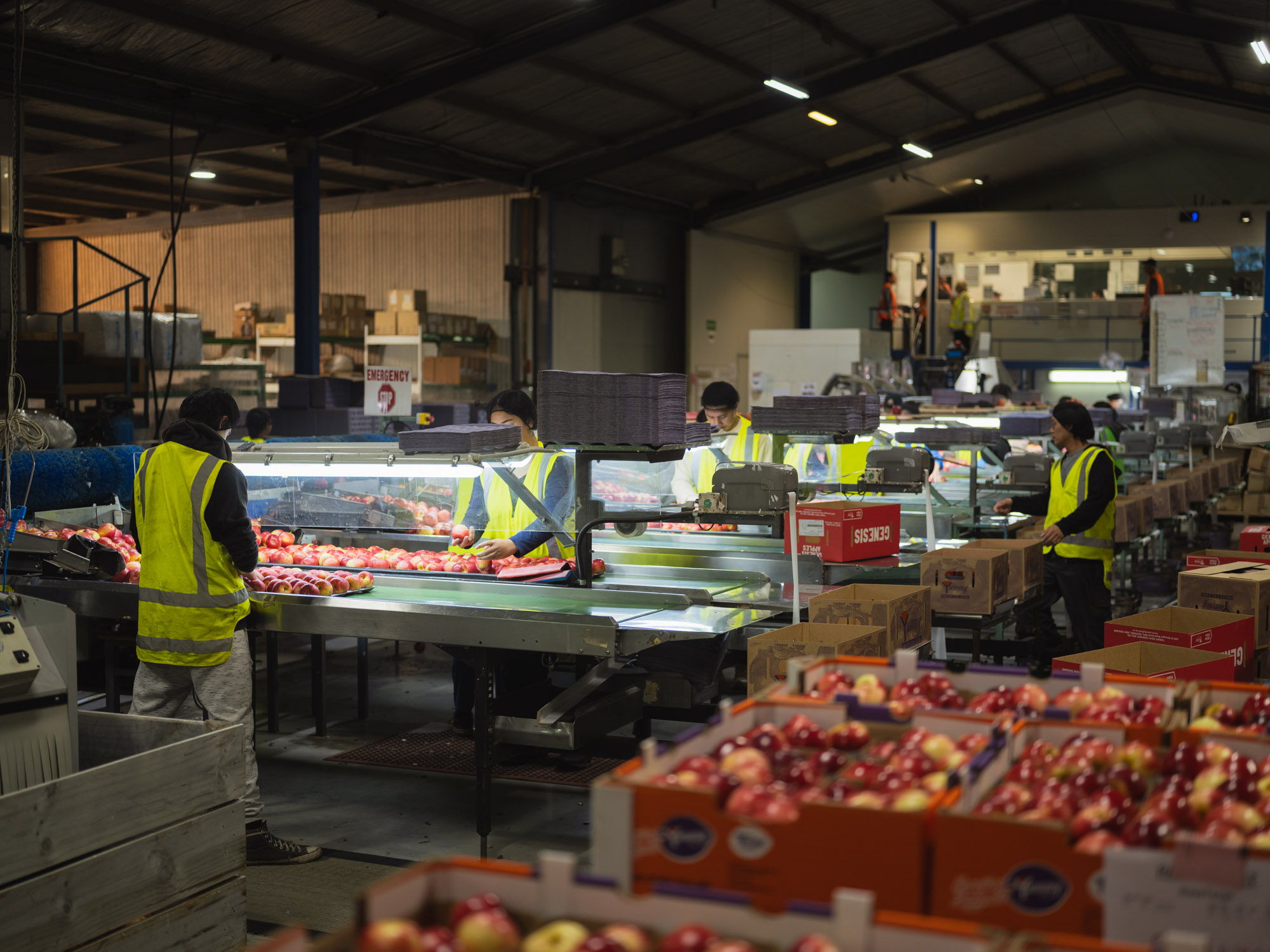
Inside the packhouse — fi rst built by Paul’s grandfather in 1941 — technology is transforming the way fruit is graded and packed. Modern machines use up to 12 cameras per lane, scanning fruit with infrared and fluorescence to detect bruises and defects invisible to the human eye. “That ability to use technology more precisely to do the job is becoming very powerful. It’s very exciting.”
Storage has also become a science. Apples are harvested at perfect maturity, then placed into controlled atmosphere rooms where nitrogen is pumped in and oxygen levels are reduced dramatically. “We try to find the exact point at which we can put that apple into, really, an induced coma — a Sleeping Beauty type situation — and preserve that quality.”
Looking ahead, Paul sees a bright future for apple growing in New Zealand. “We have a wonderful climate, and developing economies in Asia that really love our fruit. They’re obsessive about quality.”
Post-Gabrielle replanting has introduced a pipeline of new varieties, including red-fleshed apples, a breeding project based in France’s Loire Valley that Paul has been involved in for over a decade.
“The red flesh inside of these new varieties often have berry and strawberry-type flavours. I’ve seen kids’ eyes light up; they love the flavour and the way they look. That’s really our job as growers, to produce exciting, innovative products from the natural world.”
Nearly 50 years after that fi rst Yummy label was stuck onto a nectarine, the business continues to evolve, blending science with soil, technology with tradition. Out in the orchard, rows of trees stand as both legacy and promise. For Paul and his team, it’s never just about growing fruit. It’s about growing something inspiring; something that connects families, communities and generations. At The Yummy Fruit Company, the work, like the seasons, never really stops.