


Goldpine
Letting the Land Lead: Carrick Winery, Central Otago
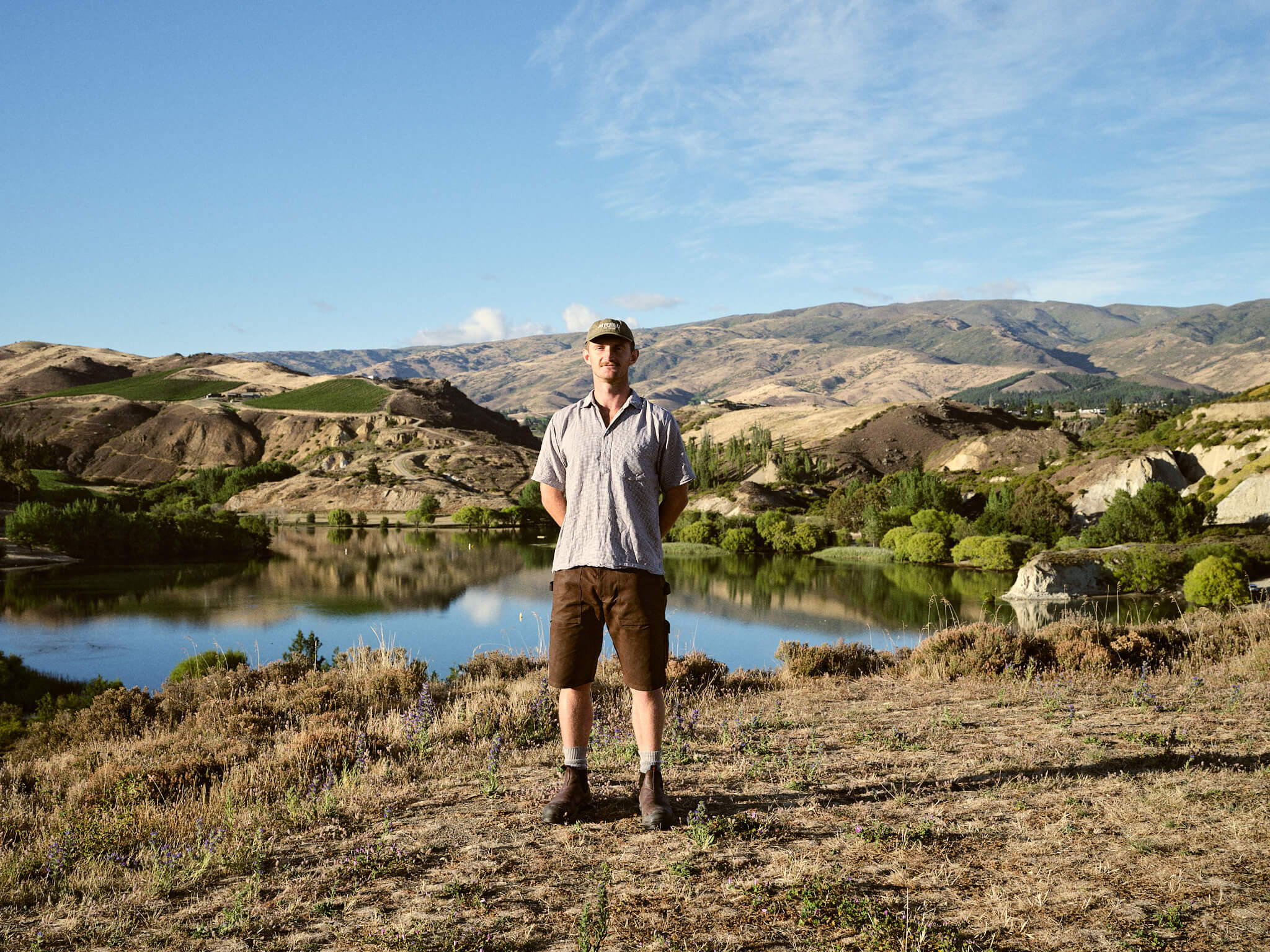
Situated in Bannockburn on a schist cliff overlooking Lake Dunstan, Carrick Winery is a pocket full of natural beauty and good wine. The property spans 23 hectares of vineyard within a broader 35-hectare estate, tucked into a landscape that demands patience, resilience, and a long view. It’s here that Damon Lovell manages the vineyard - with an approach he describes as hands-off, but deeply considered.
Owned by Alison and Tony Cleland and, Damon manages the vineyard, with a skilled team working alongside him from vines to wine. The winery produces its own brand wine alongside olives and vegetables for their cellar door and restaurant. Damon is relatively new to Carrick, having been vineyard manager for around a year and a half, but viticulture has been his focus for much longer. He studied viticulture at Lincoln University, then spent time working in vineyards and wineries across the UK, before the pull of Central Otago brought him home. “It’s a cool, small property with a great team. I absolutely love it here.”
Carrick Winery began as an organic certifi ed vineyard in 2008, formed from the coming together of three separate properties into a single estate.
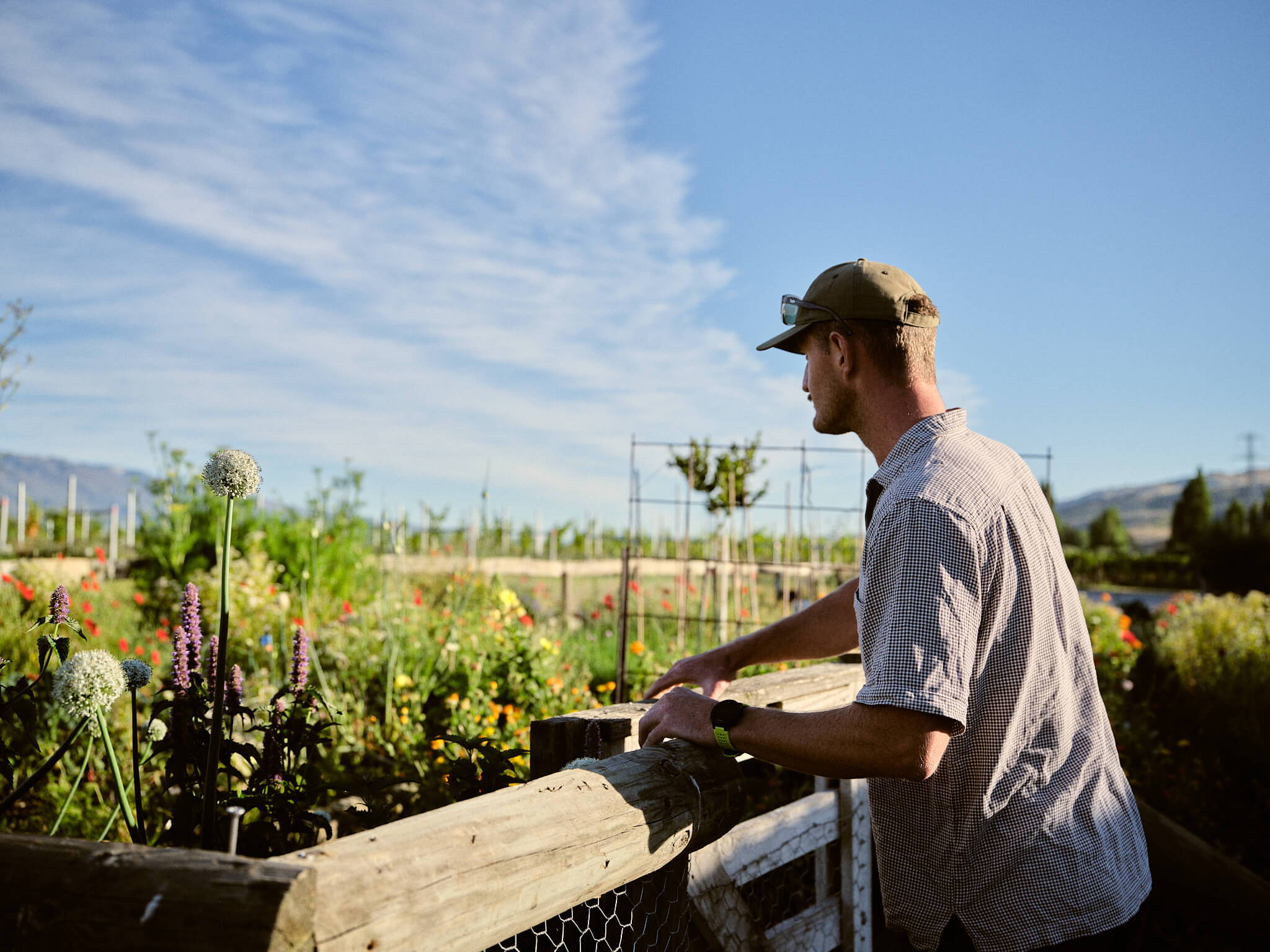
From the outset, Pinot Noir has been its backbone, and today it still accounts for around 70 percent of plantings. Chardonnay follows, alongside Pinot Gris, Riesling and Pinot Blanc. While the core range remains classically Central Otago, Carrick also produces a discovery range - a space for exploration, including natural wine styles that sit alongside more traditional expressions. “We do a bit of everything, really,” Damon said.
The vineyard team reflects that same balance. At peak season, Carrick employs just under 50 staff . “It’s a lot of fun coming to work when it’s basically 50 of your good mates,” Damon said. “We work hard, but we’re a very social team. Everyone gets along really well, and we like a catch-up at the end of the day.”
Among the wines Carrick produces, Damon has a few favourites. “My favourite Pinot would have to be the Magnetic,” he said, referring to a wine grown on a small block of Abel clone Pinot Noir. “It’s just delicious.” His other standout is less expected. “The Pinot Blanc is a big one for me. There’s only about 30 hectares of Pinot Blanc in New Zealand, and we’ve got a little slither of that. It’s got a heap of personality and it’s a great wine to surprise people with.”
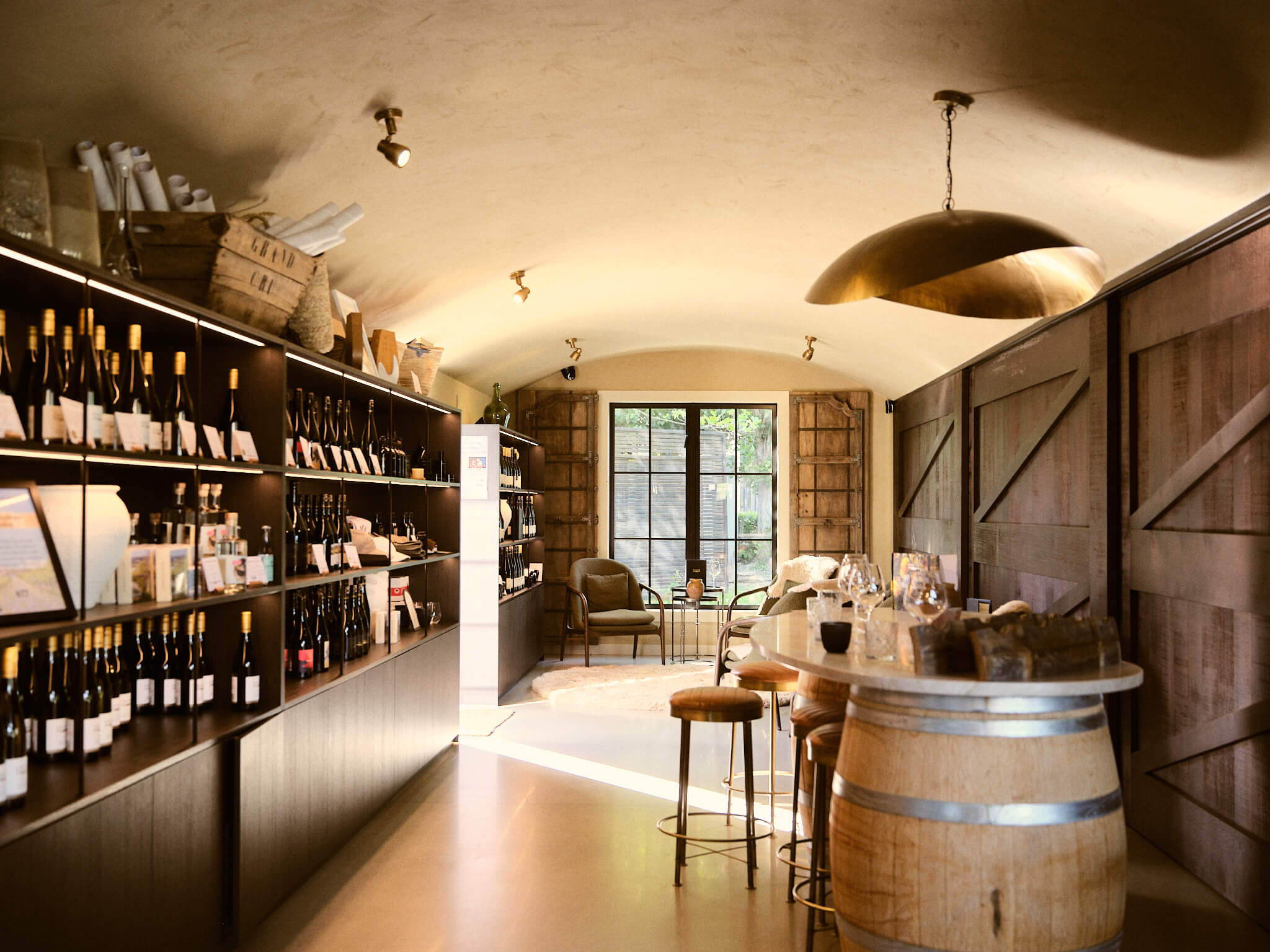
Carrick is more than just a vineyard. The property includes a cellar door, restaurant, and the more casual Waikaia Room, offering informal dining and coffee. There are also bookable spaces for private groups, along with two on-site houses available for visitors staying in the region. An olive grove adds another layer to the operation. “We’ve got a hectare of olives that we harvest in May,” Damon said. “This year we got about 850 kilograms, which pressed out to 142 litres of oil. We use it in the kitchen and restaurant.”
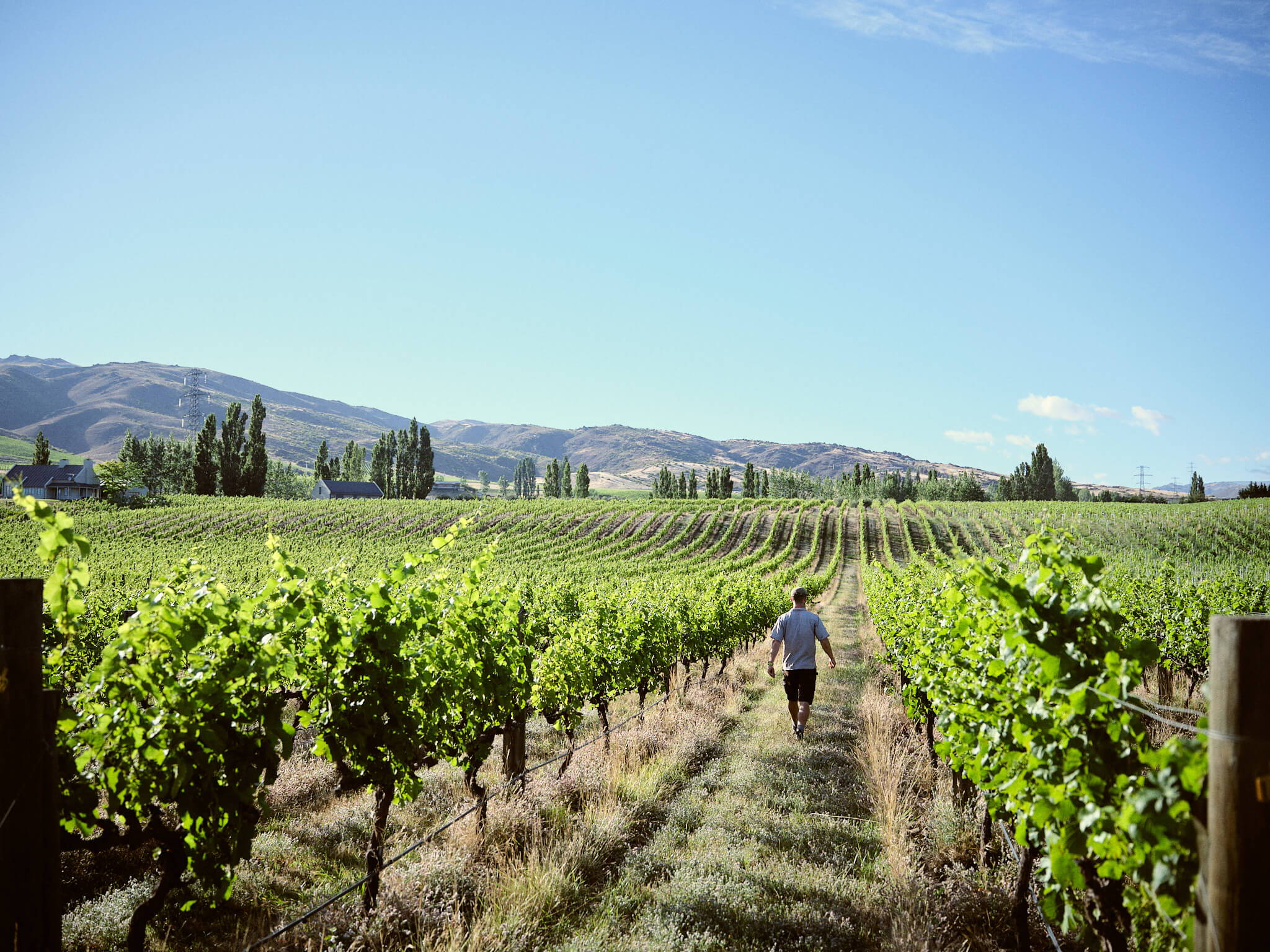
Out in the vineyard, Damon’s management style is clear.
“Some people would call it messy,” he said. “I call it alive.” He’s unapologetic about letting the vineyard look full of life. I’m not going to mow just for the sake of it looking pretty. I’m a big fan of plant diversity and encouraging as many insects and bugs as we can.”
That philosophy extends directly into Carrick’s organic certification, which has been in place since 2008. “It comes back to sustainability,” Damon said. “Avoiding harsh chemicals, encouraging biodiversity, encouraging life.” For him, organic farming is inseparable from soil health, and soil health is central to everything Carrick does.
“Growing soil is probably one of the best things we can do,” he said. “That dark top layer - the organic matter - that’s carbon. That’s the part of the soil profile that’s alive. The more of that you grow, the more carbon you’re pulling out of the atmosphere and storing in the ground.”
Carrick produces its own compost on site, operating a commercial-scale heap that yields around 70 cubic metres of cured compost each year.
It’s built from organic cow manure, vineyard prunings, kitchen waste, coffee grounds and other carbon sources from around the property. “Anything that can be composted goes in,” Damon said. Once cured, the compost is applied beneath vines that need it most. “Effectively, we’re striving to make our own fertiliser and keeping everything in-house.”
Another technique used at Carrick is vine layering training an existing vine down into the soil to regenerate a new plant, rather than replanting from a cutting. “It transfers the epigenetics from the mother vine to the new vine,” Damon explained. “That means drought resistance and environmental adaptation that the vine has learned over 20 or 30 years gets passed on.”
The vineyard also uses diverse cover cropping to build soil health. Alongside grasses and clovers, Carrick plants rye corn, phacelia, buckwheat and vetch. “The idea is to push biodiversity,” Damon said. “The more plant diversity you’ve got, the more sugars get released into the soil, feeding bacterial populations and growing soil faster.”
The environment Carrick operates in is not an easy one. The Bannockburn subregion is harsh, with low organic matter and limited water-holding capacity. “The vines struggle,” Damon said. “But through that struggle you get richness, complexity and texture. Some of the wines can be quite angular early on, but they mellow into really rich, age-worthy wines over time.”
This season has been particularly windy, affecting canopy growth and flowering. “We don’t have the same canopy size we had last year,” Damon said. “Flowering was a bit rough, so we won’t have big yields, but that’s okay. Smaller bunches mean more flavour.”
Carrick sells its wines through its cellar door, online, wine club, independent wine stores around the country, and a small number of supermarkets. Looking ahead, experimentation continues. Alongside a new block of Pinot Noir being planted next year, Damon has ordered small numbers of Gamay Noir, Saperavi, Syrah, Cabernet Franc and Dolcetto. “We’re not making wine from them just yet,” he said. “We just want to see how they grow. If in five years one of them looks like it performs really well here, then that could be an option for the future.”
In Central Otago’s demanding landscape, that sense of life - in the soil, the vines, and the people working among them-is exactly what Carrick Winery is built on