


Goldpine
Leading from the Vines: Spring Creek Vintners, Marlborough
Driving Efficient Use of Resources
Whether from a financial or environmental perspective, many across the rural sector want to get the best out of every resource within the loop. In Marlborough, progress has rarely come from a single breakthrough. More often, it’s been the result of many small decisions, made season after season, by growers who know their land and want to leave it in better shape than they found it. Over time, those decisions have added up.
Water is a good place to start. Early irrigation systems did the job, but they weren’t always precise. Today, most vineyards operate with a far lighter touch. Drip systems, soil moisture monitoring, and a better understanding of vine physiology mean water is applied only when needed and in the required volumes. In a region defi ned by free-draining gravels and long dry summers, that matters. The aim isn’t to use more water to grow more vines, but to use just enough to grow better fruit. It’s a shift from volume to intent, and it’s made Marlborough one of the more effi cient water users in the primary sector.
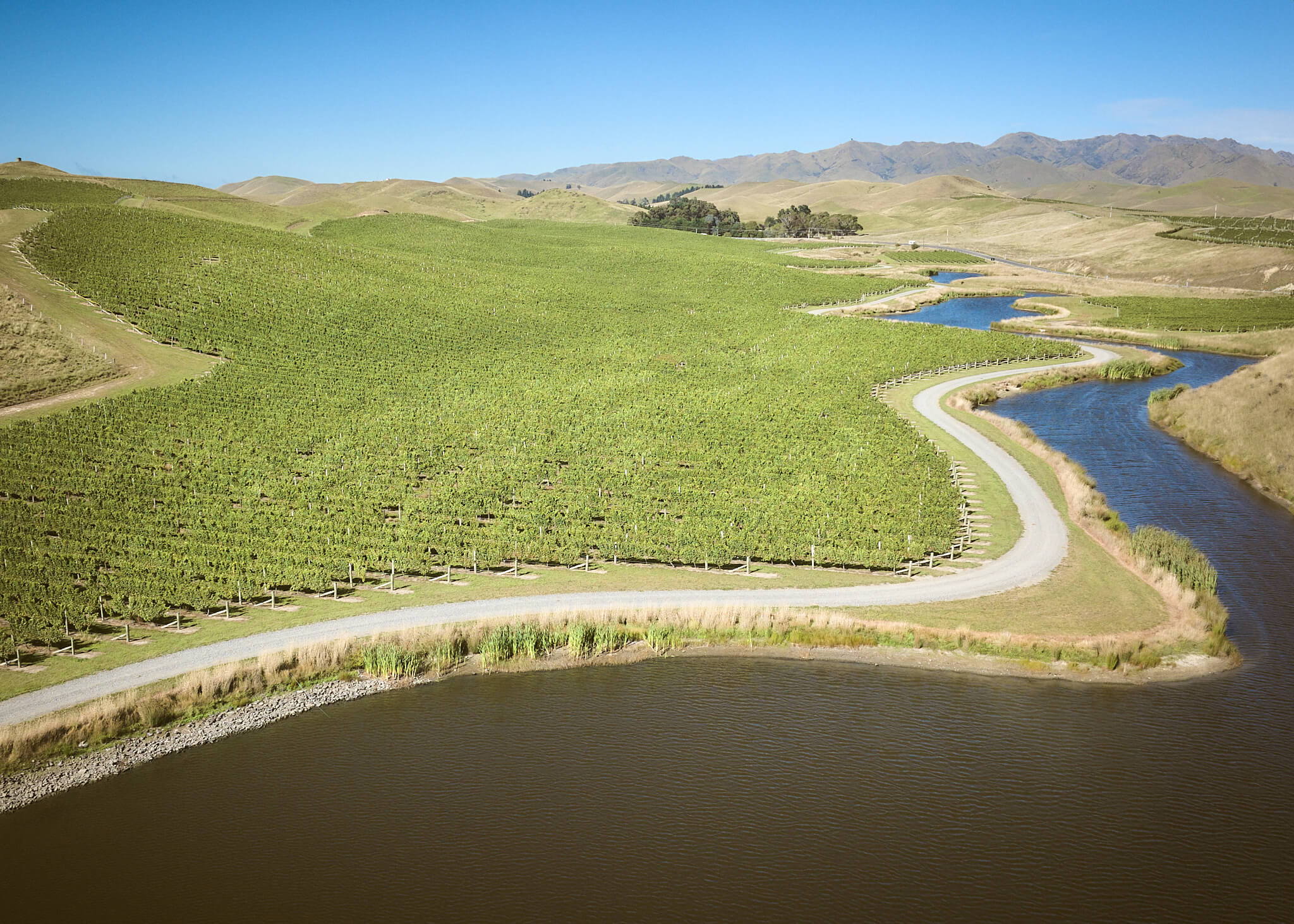
The same thinking has played out with grape marc. What was once a by-product to be dealt with has become something to be managed carefully, and increasingly, something of value. Growers and wineries now treat marc as a resource – composted and returned to the vineyard, or directed into other uses – rather than something to be stockpiled or spread without thought. It’s another example of the industry moving from a disposal mindset to a stewardship one, recognising that what comes out of the process still has value and a role to play. There is no shortage of research into soil health, and at the intersection of forestry, dairying, and viticulture, there’s a promising mix of biochar, effluent, and marc on the horizon; a potent nutrient-buff ering and soil-building engine.
Across the vineyard floor, there’s been a quieter shift as well. The millions of plastic ties and plant guards that were once standard are gradually being replaced. In their place are biodegradable options that do the same job for a season or two, then break down naturally. It’s a small change at the level of a single vine, but across Marlborough’s scale, it’s signifi cant. As with many things in the rural sector, it’s not about reinventing the system overnight but about improving it incrementally.
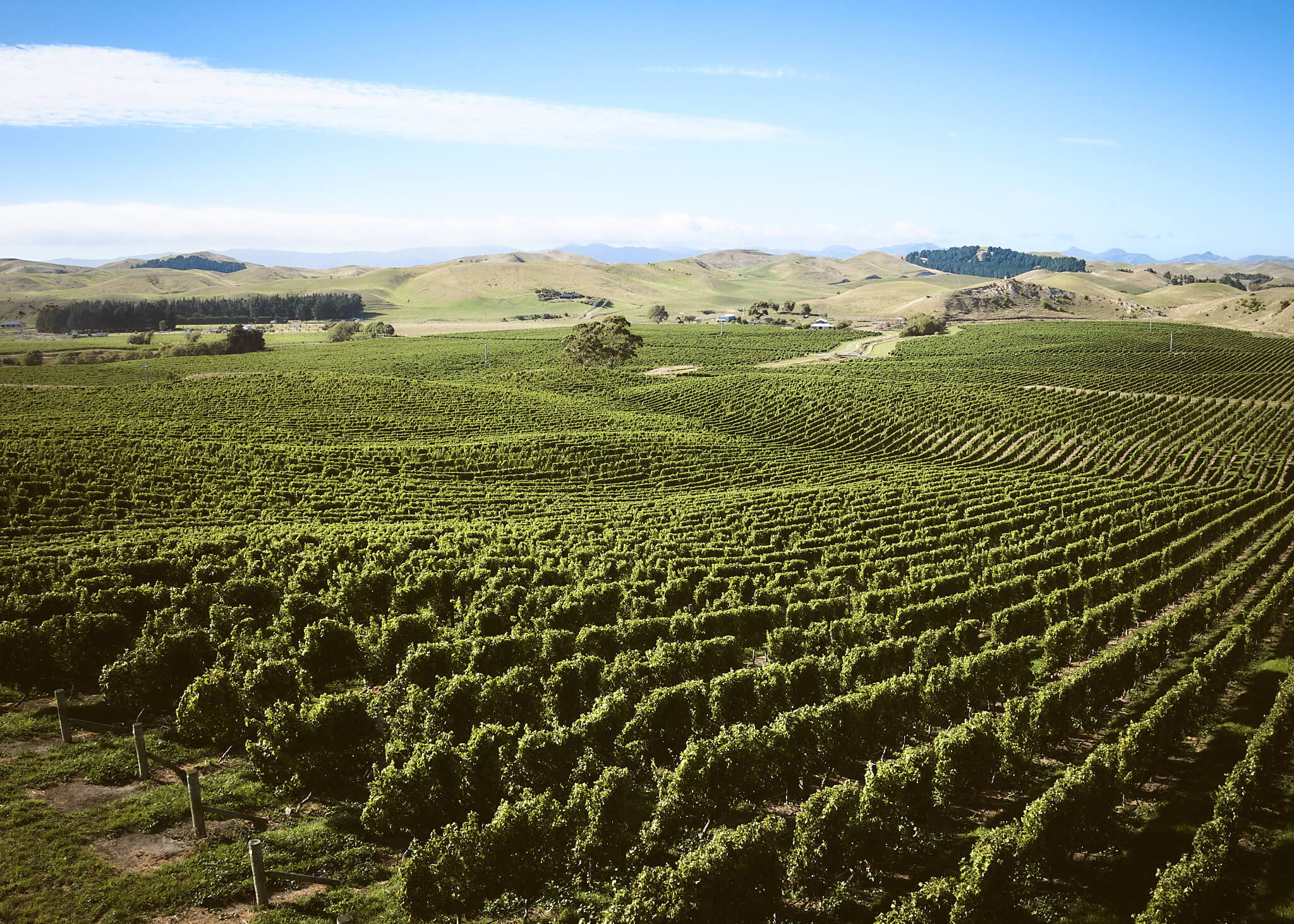
Then there’s the infrastructure itself. Posts have always been built to last, but even the best products eventually face wear and breakage, particularly under the pressure of harvest.
The Everpost™ programme is a continuation of that same philosophy of making the most of what you’ve got, keeping good timber in service for longer, and Georgie Sullivan, Waste Minimisation Lead at Marlborough District Council, explained why extending the working life of posts is a priority for the region.
Georgie said it’s no surprise the sector is under the spotlight. “Construction and farm/vineyard waste is a major focus area in Marlborough. These sectors contribute a signifi cant proportion of the region’s total waste to landfill, and much of this material is highly divertible when the right systems and infrastructure are in place.”
In a region that produces nearly 80 per cent of the country’s wine, and nearly $2b of export revenue each year, there’s naturally a lot of infrastructure holding it all up. Over time, with full exposure to the elements, heavy machinery, and strain, posts can wear out.
From July 2025 through to March 2026, more than 80 tonnes of broken vineyard posts (approximately 6,000-8,000) came through the weigh bridge from suppliers all over New Zealand – many with decades of capable service still left in them. Better than it used to be, but still a decent heap of usable timber written off too early. “Eighty tonnes is still a significant amount,” Georgie said, “and it shows there’s room to improve.”
For a long time, once a post came out of the ground, there wasn’t much else you could do with it. The systems for sorting and reprocessing timber simply didn’t exist. As Georgie put it, “This left landfill as the default option.” With solutions like Everpost™ and Repost, broken posts no longer become a problem to manage; they’re recovered, reworked, and put back into service.
It’s not about perfection, but about extending the life of a natural resource that’s already done decades of work, and still has more to give.
There’s another angle too, and it’s one getting more attention across farming and viticulture. Carbon. “Timber stores carbon. When we keep posts in use, that carbon remains locked up for longer,” Georgie said. Keeping posts in active service for their full capable life is a smart use of a natural resource – and as Georgie noted, “keeping posts out of the landfi ll reduces the ETS liability.”
It’s a practical way of looking at things. Use what you’ve got for as long as you can, and you save on more than just replacement costs. The good news is, things are starting to change. “The landscape has changed dramatically with a number of feasible options on the market to re-use or recycle,” Georgie said.
Initiatives like Everpost™ and Repost are keeping good timber in service, giving posts a second working life rather than retiring them early. It’s the kind of solution that makes sense in a rural setting. Nothing fancy, just making sure a solid resource does the job it was built for.
“Ideally, vineyard owners will deal with broken posts as they occur, for example, at the end of each harvest, rather than stockpiling them,” she said. “Quick turnaround keeps valuable material in use and reduces unnecessary waste.”
It’s simple advice aligned with farmers’ thinking: don’t let useful things sit unused if they can still do a job. There’s also a strong sense that Marlborough needs to lead from the front here. “It matters that this solution is happening locally because Marlborough produces the majority of New Zealand’s wine - close to 80% of national production,” Georgie said. “With so much of the country’s vineyard activity concentrated here, most of the associated waste is created in this region. We need to deal with the issue in our own region responsibly.” Handling it locally keeps things efficient, reduces transport, and supports businesses in the region. It also just feels like the right thing to do.
Looking forward, Georgie said the goal is pretty clear. “Ultimately, we’d love to see solutions like Everpost™ become standard practice across the industry, helping make reuse and recycling the expectation rather than the exception.”
None of these changes, on their own, defi nes the industry. But together, they reflect a consistent pattern. Marlborough’s vineyards have grown up with a mindset of continuous improvement – a million small steps, each one making better use of the resources at hand. And taken together, they’ve shifted the system in a meaningful way.
Marlborough has a sensational reputation on the world stage for premium wines that reflect its terroir, its people, and a passion for the product. End-to-end, the sector is raising the bar. New varietals, growing structures, new goals; underpinned by a drive to make a lot out of a little. The original pioneers who kicked the industry into gear, many decades ago, would toast to what we see today.