


Goldpine
Greystone's Living Landscape: Greystone, North Canterbury
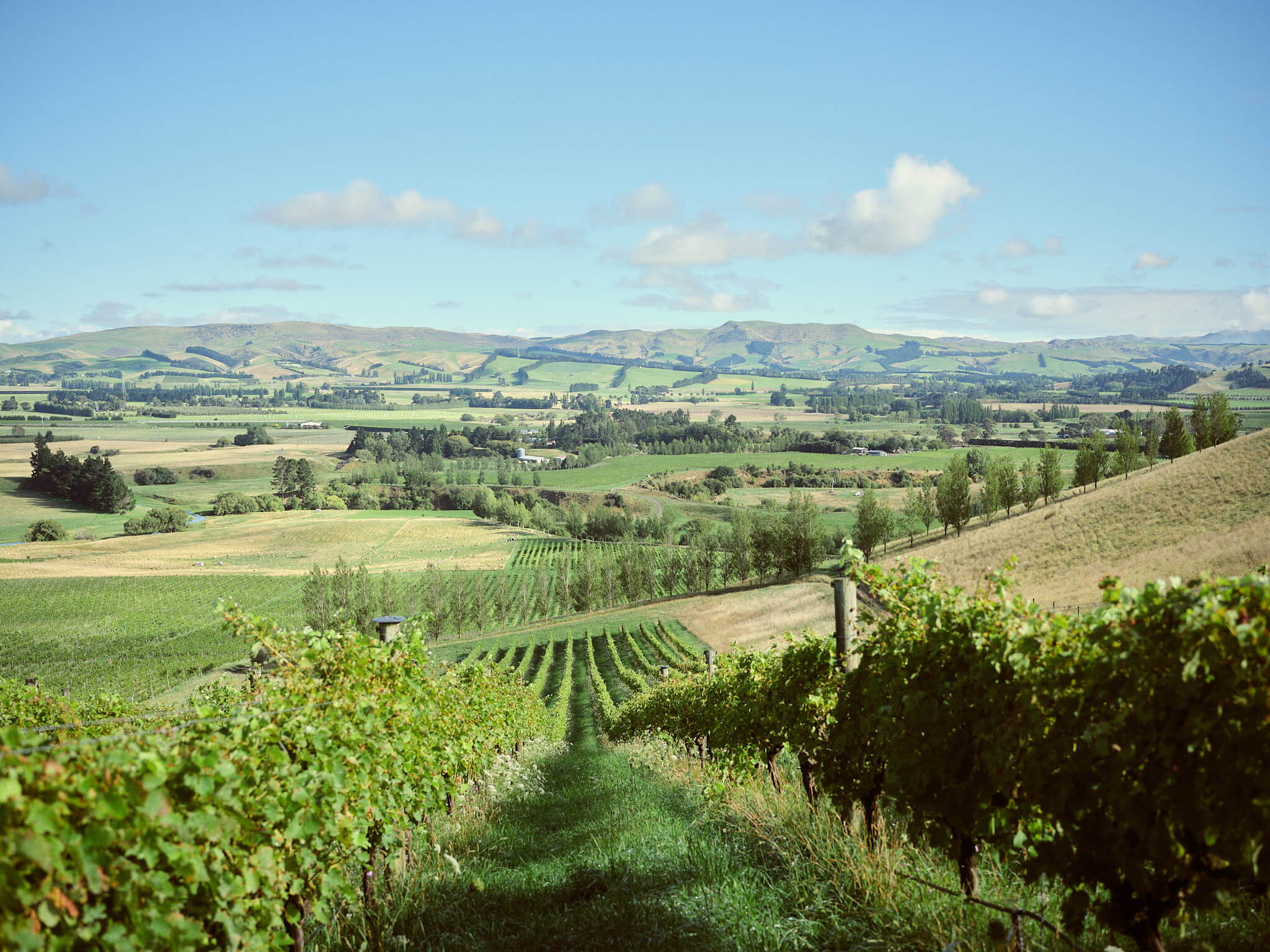
Beneath the limestone ridges of North Canterbury, with Mount Cass rising behind and the Waipara township just minutes down the road, Greystone occupies a landscape shaped by tectonic movement, coastal weather systems, and decades of well-planned farming. It is here that vineyard manager Liam Burgess oversees one of the region’s most progressive and thoughtfully-run vineyards.
The setting is dramatic, but it is also demanding. Steep hills, shifting soils, frequent frosts, and unpredictable rainfall combine to create one of New Zealand’s most challenging wine growing environments. For Liam and his team, success has come not from fi ghting those conditions, but from learning to work with them.
Greystone is a 50-hectare certifi ed organic vineyard set within around 120 hectares of farmland. The original plantings went into the ground in 2004 and 2005, at a time when organic viticulture was still far from mainstream in New Zealand. For its fi rst decade, the vineyard was farmed conventionally.
That began to change in the early 2010s. “In 2011 we acquired a neighbouring property, which was the original Muddy Water Vineyard,” Liam explained. “That property was already fully certifi ed organic.”
The acquisition increased Greystone’s planted area from 36 hectares to 50, but it also presented a choice: operate two different systems side by side, or unify the approach. “It was partly about the ease of switching to one system,” Liam said. “But it also aligned with our ethos and our desire to be lighter on the earth and try to do things more sustainably.”
The conversion process began in 2014 and, after three years of transition, Greystone achieved full organic certification in 2017. Today, the vineyard has nearly a decade of certified organic production behind it. For Liam, organics is not about ideology. “It’s not the whole puzzle,” he said. “But it’s a big piece of it.”
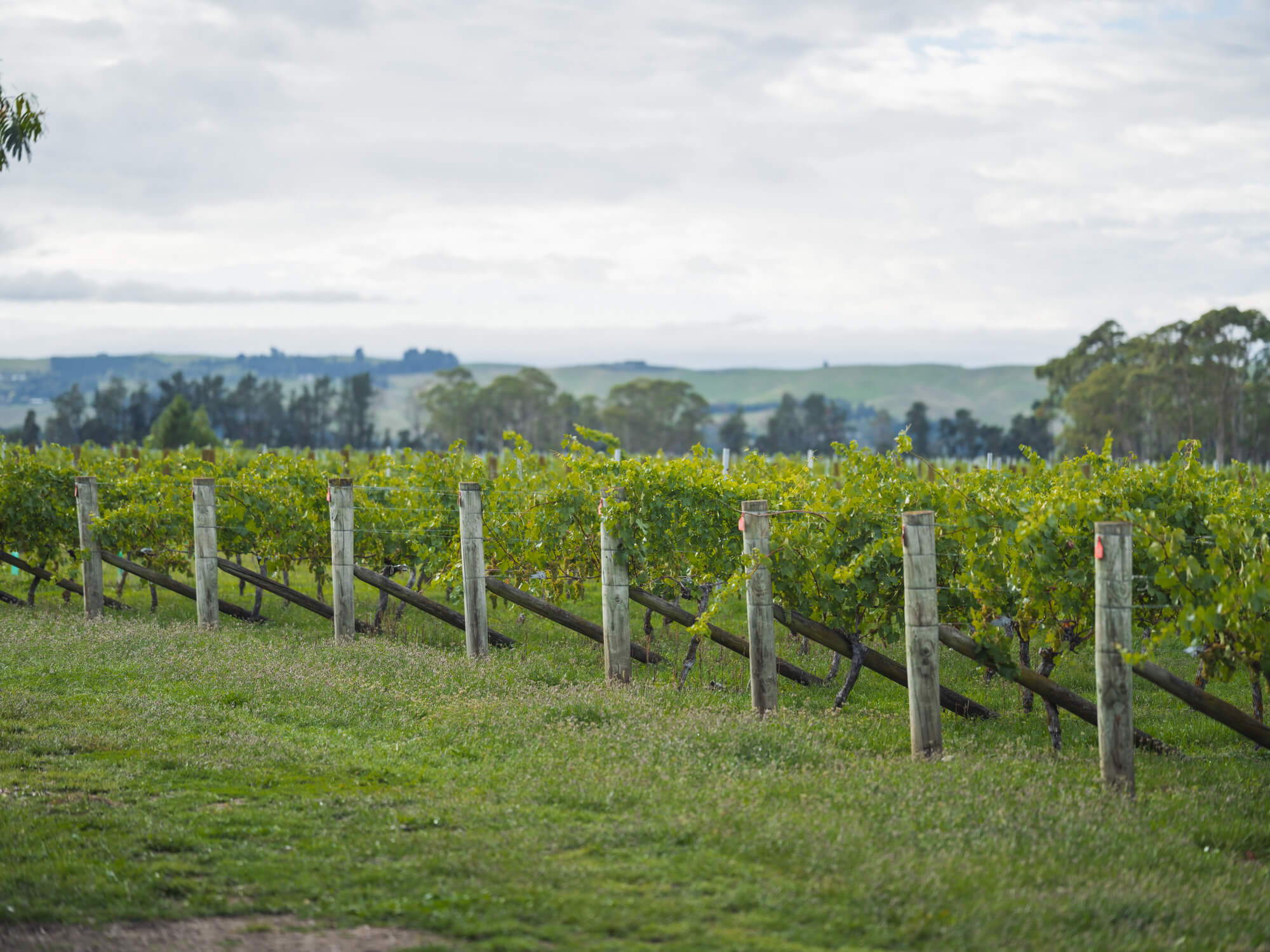
While Greystone, which is certifi ed organic, follows many standard organic practices - cover cropping, composting, winter grazing - it has developed one system that sets it apart nationally. The “regen block” or “high-wire” block at Greystone is diff erent to traditional trellising systems which position fruiting wires around one metre off the ground. At Greystone, this has been lifted to nearly 1.8 metres, creating a hanging canopy.
“The shoots hang out, the fruit hangs down, and it’s lightly shaded,” he explained. The elevated structure allows sheep to graze beneath vines year-round. “We can have sheep here in summer,” Liam said. “They do the mowing, the weeding, the de-suckering.” The impact has been transformative with many labour-intensive vineyard tasks being eliminated. “We don’t do wire lifting. We don’t do leaf plucking. We don’t do trimming. We’ve probably more than halved our diesel emissions.”
The financial savings are substantial. “Mowing and under-vine work can cost up to $1,600 a hectare,” he said. “In here, all we really do is prune and spray.” At the same time, soil structure has improved. “We’re reducing compaction and improving soil biology,” Liam explained. “You’ve also got nutrient recycling happening naturally.”
Greystone’s plantings refl ect both market realities and a willingness to experiment. Around half the vineyard is devoted to Pinot Noir, forming the backbone of its red wine programme. Smaller blocks of Syrah and Pinotage provide diversity and character.
“Pinot makes up the bulk of our reds,” Liam said. “We’ve got a little bit of Syrah up on the hill, and an old block of Pinotage.”
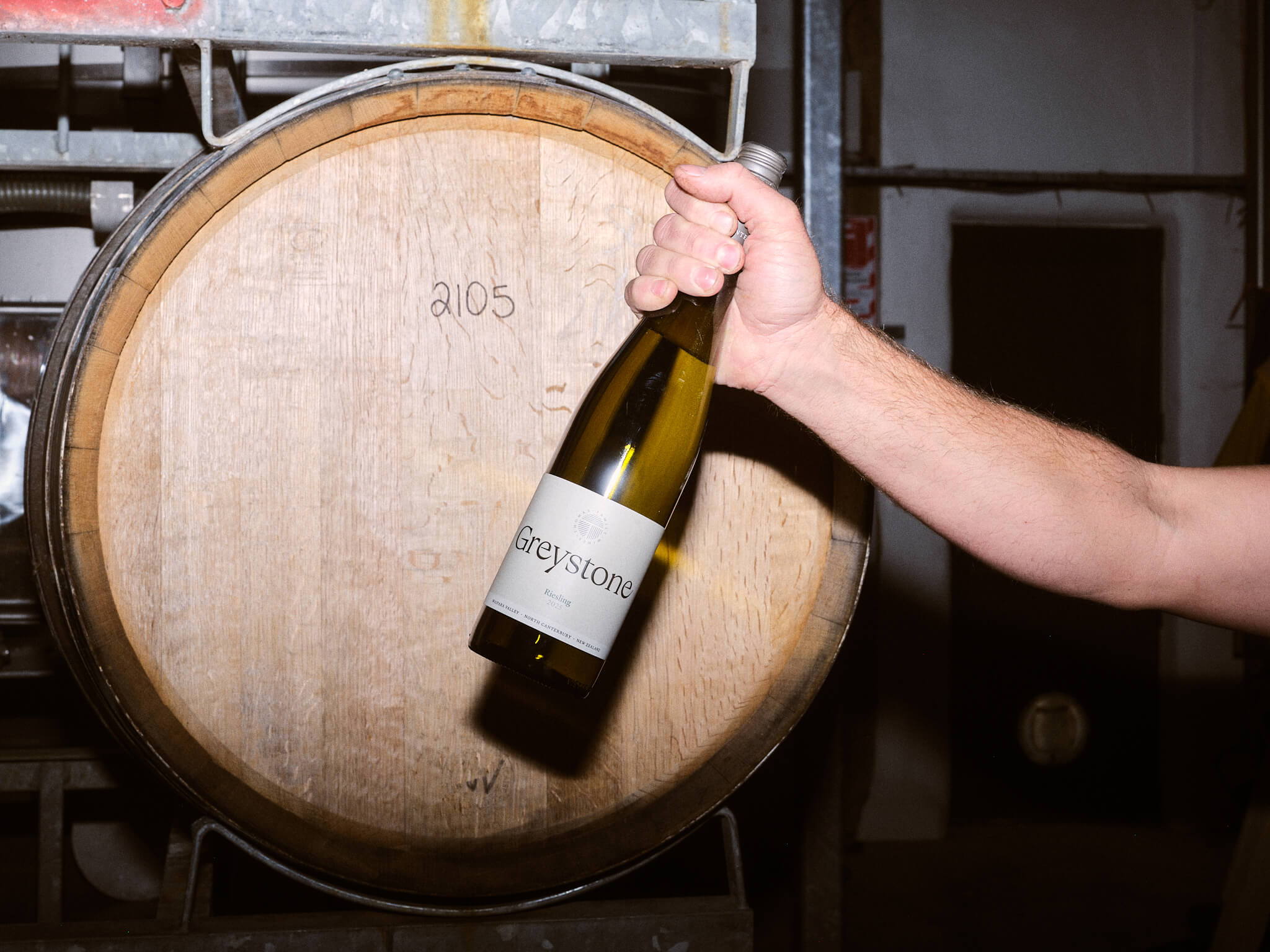
The whites are equally varied. Sauvignon Blanc, Pinot Gris, Riesling, and Chardonnay make up the repertoire of the winery. This range gives the winery flexibility, particularly at harvest. Although Liam does not manage the winemaking directly, his role is central in shaping the final product.
With dozens of blocks spread across diff erent slopes and soil types, Greystone can adjust its approach each season. “One block might be perfect for a wine style one year,” Liam explained. “The next year, if the crop is small, it might be too tannic, too acidic, or overripe. There are lots of levers we can push and pull,” he said. “But largely, we’re trying to let the fruit speak for itself.
For Liam, sustainability is not confi ned to vineyard practices; it runs through the entire business. In the winery, lighter-weight glass bottles have replaced traditional heavy Burgundy styles, cutting transport emissions. Packaging tape has been replaced with compostable alternatives. Waste is minimised wherever possible. “There are lots of little things,” Liam said. “They all add up.”
“And I can see why. I have experienced Otago winters, and while the frosts might not be as harsh, they can be as frequent. Northwest winds can desiccate vines in dry years. You feel like you get it from all fronts,” he said.
Being organic adds complexity, particularly in wet seasons. “Disease management, from an organic perspective, is more about your canopy management. Making sure that we’re shoot thinning the right number of shoots, getting that spacing right, getting leaves off early, around fl owering time, so that we’re opening up the canopies to allow air flow in and out. We fi nd, if we do that, and we do that well, we don’t have issues with disease.” When done well, it works, he added.
Part of what makes Greystone distinctive is its geological diversity. The vineyard spans soils shaped by millions of years of marine sedimentation and tectonic uplift.
“The further back into the hills we go, the more limestone we find,” Liam said. “Down on the flats, it’s more loam, clay, and sandstone.” This variation influences vine growth, water retention, and flavour development. “It gives us diversity,” he explained. “And more options in terms of what we grow and how we grow it.”
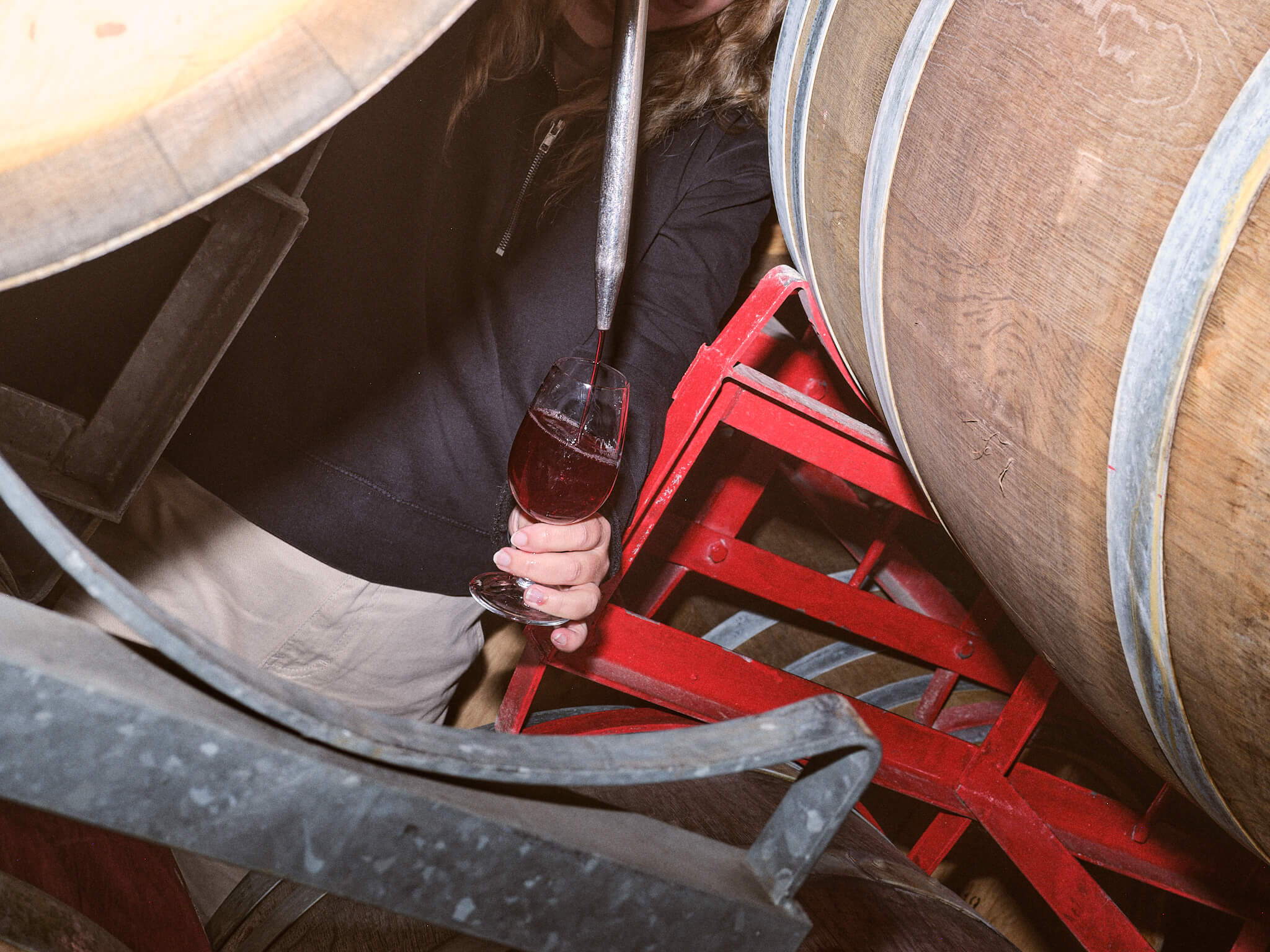
One of Greystone’s most distinctive practices is its vineyard ferment programme. Rather than transporting harvested fruit to the winery, tanks are placed directly in selected blocks. “We process the fruit in situ,” Liam said. “It ferments right there in the vineyard.”
The aim is to preserve microbial and environmental signatures unique to that site. “We’re capturing that block, that time, that year,” he explained. Research has shown that yeast populations diff er between vineyard and winery environments. The resulting wines refl ect that difference. “We believe it’s the best Pinot we produce,” Liam said. “It really captures the terroir, it’s straight from the land.”
Living near Christchurch has shaped Liam’s perspective on the region. “Christchurch is a world-class city now,” he said. “The convention centre, the stadium, the airport - it’s a real opportunity. There are some really exciting wines being made here,” he added. “And some amazing people.”
For Liam, the appeal of Greystone lies in its diversity. “Every day is different, every day is challenging.” Unlike large, flat vineyards elsewhere, Greystone is fragmented and complex. “It’s a very diverse 50 hectares,” he explained. “Different soils, slopes, frost patterns. You’re always adapting,” Liam said.
From sheep-grazed vines to in-vineyard fermentations, Greystone reflects a philosophy grounded in observation, restraint, and respect. “We’re trying to let the land speak,” he said. In doing so, Greystone is crafting not just bottles of wine, but a living expression of North Canterbury - one shaped by limestone, climate, and people committed to farming with both care and conviction.