


Goldpine
Down to the Last Log: Whakatū, Nelson
For more than 50 years, Nigel Bryant Logging has been part of the forestry landscape in the top of the South. What began with a 21-year-old starting his own business has grown into a diverse contracting operation built around experienced people, evolving technology and a simple commitment to doing the job properly. Today, managing director Kim Bryant is carrying on the business his father, Nigel, started more than five decades ago.
When we met Kim in Wakefield, just outside Nelson, the backseat of his ute held a box steaming with bakery pies. He’d bought a load to give to the team on site at the Tasman Pine Estate forestry block, and it gave us a look at a leader who really cares about his team.
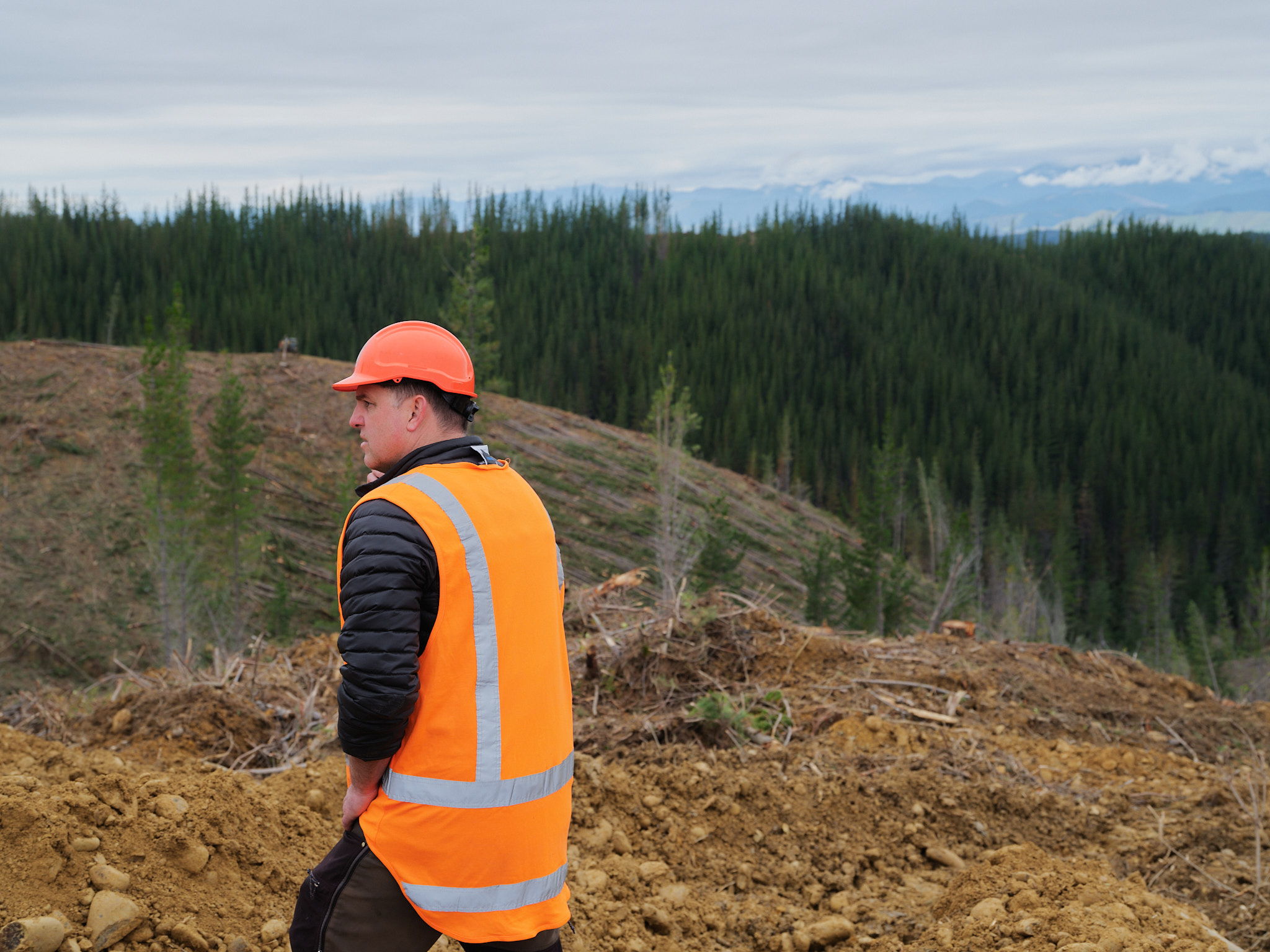
Kim’s own introduction to forestry came much earlier than his eventual management role. He spent school holidays working in the industry, helping with breaking out and other odd jobs before heading overseas. He eventually returned to forestry, joining the family business full-time at around age 28.
Now, as managing director, his role is less about operating a particular machine and more about making sure the wider operation works as it should. Kim’s parents, Nigel and Karen, are still active in the business, helping out across operations. Nigel Bryant Logging operates across a range of terrain and job types, with Kim describing the business as a diverse operation with the skill and experience to take on challenging work.
“We’ve got a great skill set, experienced workers, and we don’t shy away from hard work.”
That attitude is particularly evident in the company’s work within the Tasman Pine Estate, where crews have been working through one of the region’s largest wind throw events. The event recovery has now been ongoing for more than a year, and when we visited Kim in August, the team were just over halfway through. He explained that the nature of the work is changing as they got to the smaller wood.
As those in the industry know, timing is critical when dealing with a windthrow event. “The trees only have a certain lifespan while they’re on the ground,” he told us. “The fi rst six months is pretty critical, depending on the season.”
During the cooler months, fallen trees can retain their quality for longer. As spring approaches, the wood becomes increasingly vulnerable. “At the moment, we’re in the colder months, so the wood will hang on for longer. But coming into spring, and the trees have been down for over a year, they will get more sap stained, and bugs will start coming, and rot will start developing.”
The scale of the windthrow has also highlighted just how much forestry technology has changed during Kim’s own career. “When I started in forestry, we only had two crews,” he said. “We had one Waratah, and in windthrow events, the other crew was manually cutting up trees with chainsaws.”
There was no felling machine in the operation at the time. Trees were felled with chainsaws, logs were manually hooked on and much of the work that is now mechanised required workers to be physically on the ground.
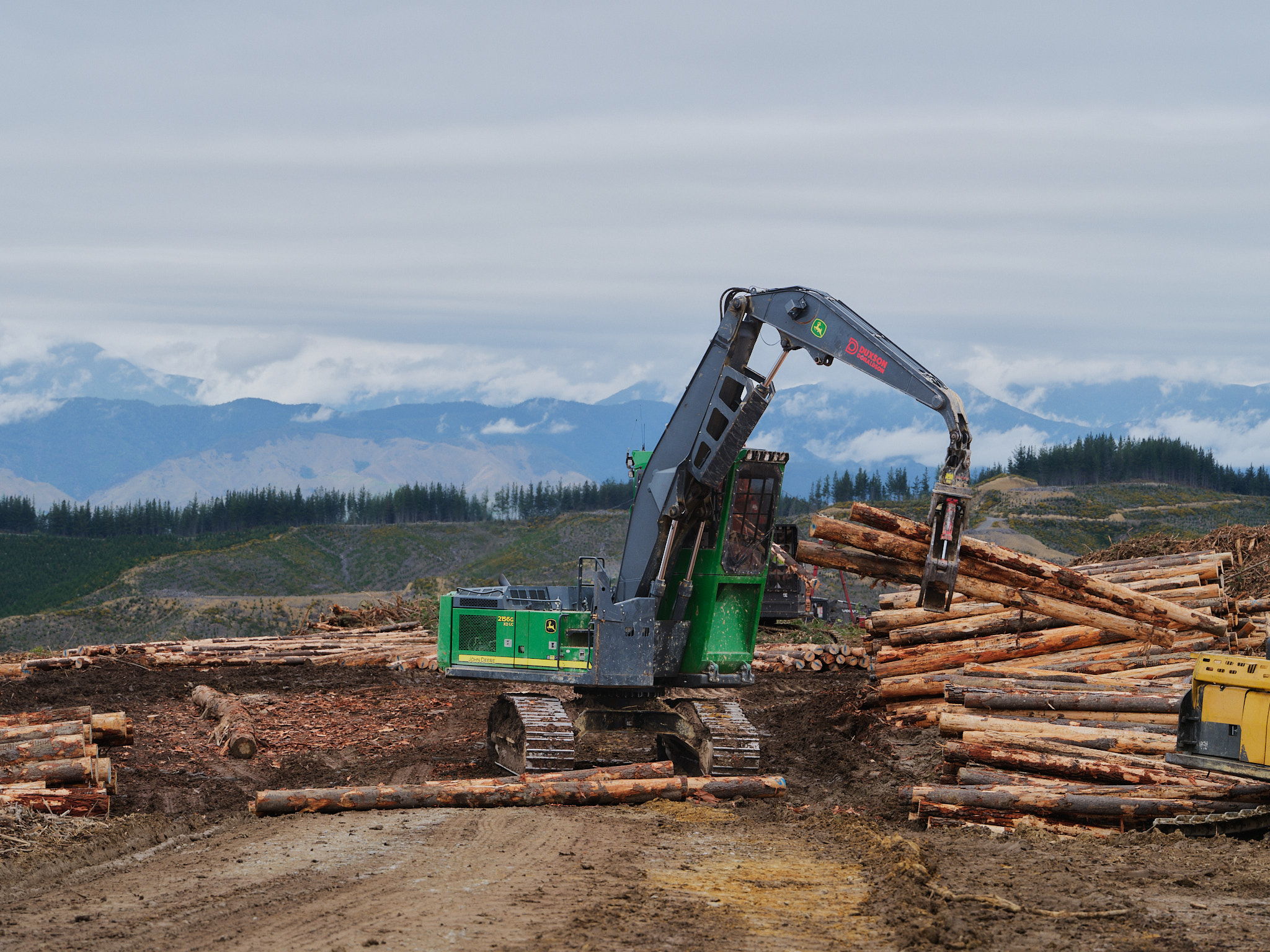
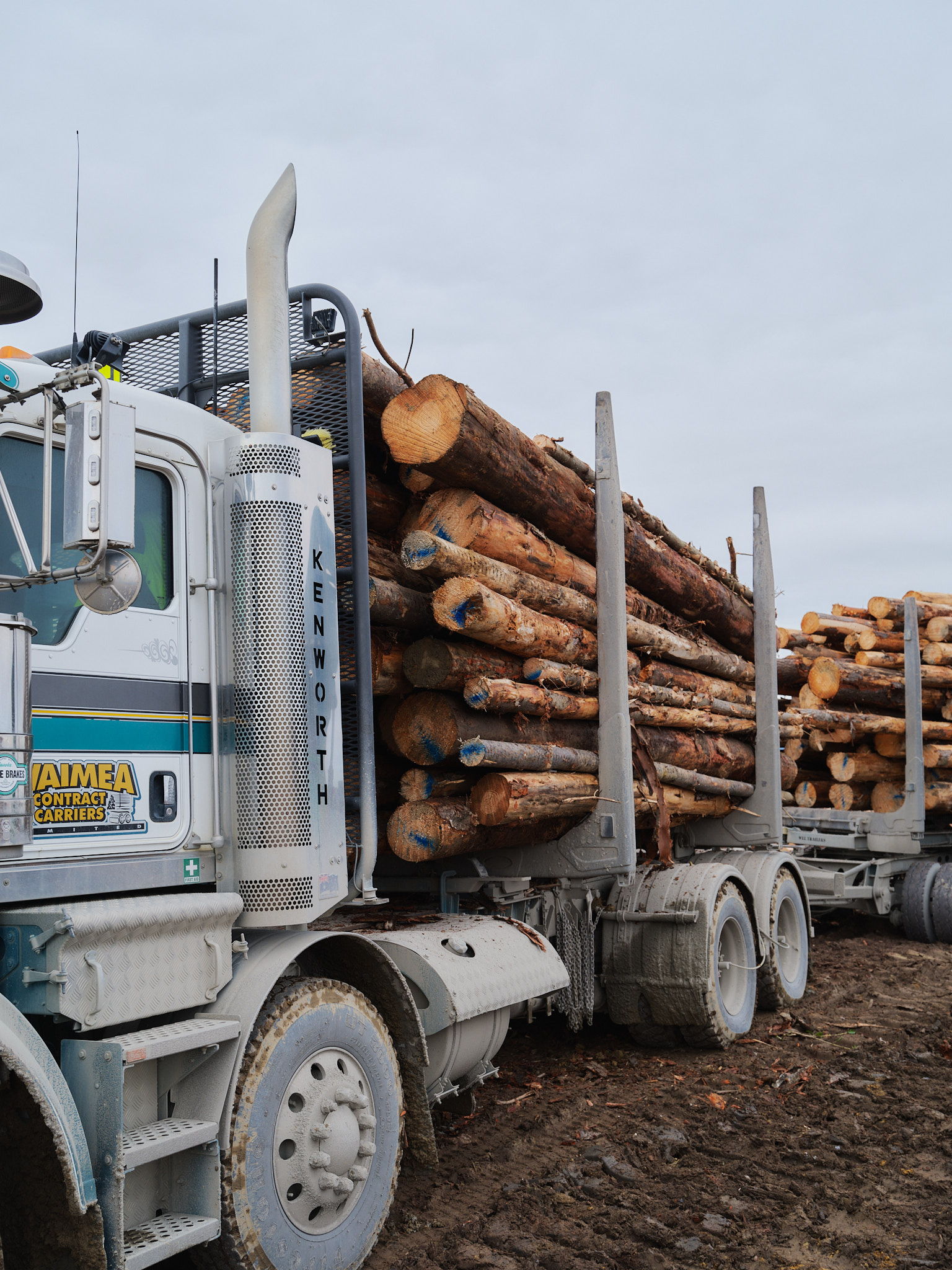
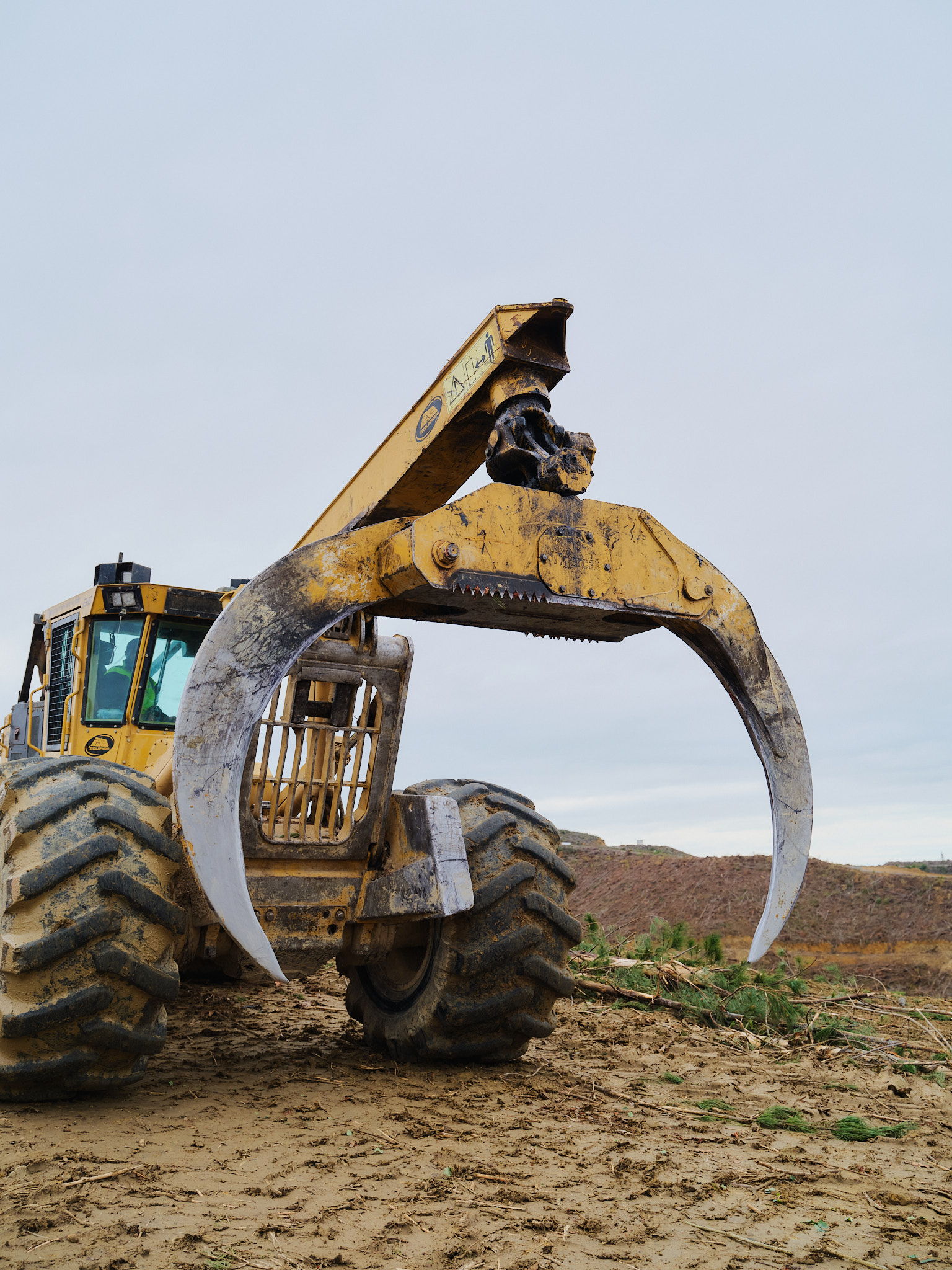
On the current site, the diff erence is obvious. A loadout digger loads trucks, a Waratah processes trees and a skidder works alongside a swing yarder to bring timber off the hillside.
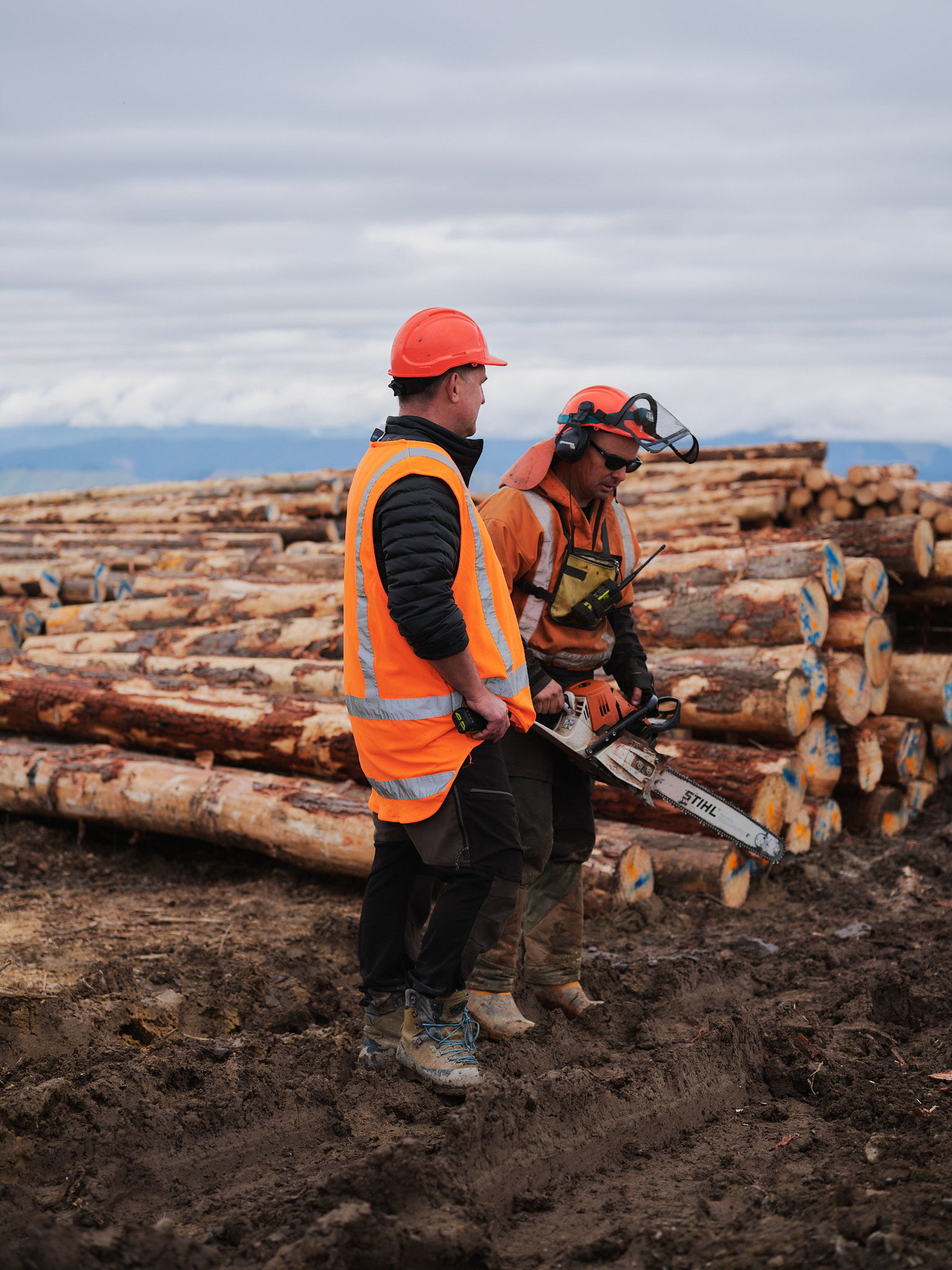
The use of modern machinery has transformed not only productivity but also the way crews approach some of the most challenging work. “Most things are mechanised these days,” Kim said. The increase in tech has simultaneously led to an increase in safety – with less of the team out in the open, working with chainsaws and manual operations, the risk of accidents has lowered significantly.
Safety is extremely important to Kim and the team at Nigel Bryant Logging, and while technology has changed how the work is done, Kim said the fundamentals of a successful operation have remained largely the same.
“Most importantly, everyone comes home safely, the environment is looked after, and we do a good job for the customer in regards to productivity and the best outcome financially.”
Safety begins well before the machinery starts moving. Harvest planning establishes how the block will be approached, while hazards are identified and controls put in place. From there, the daily tailgate meeting gives crews the opportunity to discuss what lies ahead and address issues from previous days. “It gives us a feel for what’s happening on the day coming up, and what’s happened in the past, just to rectify any problems that we’re having.”
For Kim, however, even the best systems and technology ultimately depend on the people operating them. The crew working on the Tasman Pine Estate today is a good example. “They turn up every day. They’re focused, safety fi rst. They bind into the work culture that we have,” Kim said.
That shared culture has helped create a high-performing team. The crew won Crew of the Year for the top of the South Island a couple of years ago, an achievement Kim said reflects the commitment of the people on the ground. “This is a well-performing crew led by the foreman. They’re not shy of work.” The same can be said for all of Nigel Bryant Logging’s twelve crews, which span sites across Tasman and Marlborough.
For a family business, that investment in people goes beyond simply getting the job done. Kim said he has inherited from his father an interest in seeing employees build successful lives outside the forest as well.
“I probably take after my father in that we like to see our workers succeed in life, buying houses, having families, giving them time off when they need it. It’s not always about the money,” Kim said. “That helps, obviously; but more importantly, we like to see our workers grow from young people, just out of school, right through to adulthood.”
That long-term view is perhaps the clearest link between Nigel Bryant Logging’s past and its future. The company has evolved signifi cantly since Kim’s father fi rst started it as a young man more than 50 years ago. Now one of the biggest logging companies in the South Island, machinery has replaced much of the manual work, harvesting systems have become more sophisticated, and safety planning and technology have transformed the modern logging operation.
For those at Nigel Bryant Logging, the underlying principles remain familiar. Turn up, work hard, look after the people around you, protect the environment and deliver a good result for the customer. The combination of experience and adaptability is what allows the business to keep moving forward, whatever the terrain or the challenge. “We don’t shy away from hard work,” Kim said.
After more than five decades in forestry, that sounds like a philosophy that still has plenty of life left in it.
“We’re lucky enough to be farming in a good period, and we’re pretty proud to be helping New Zealand out, really,” Rex added. “Supplying the world with our best - New Zealand beef and lamb.”
For two young farmers carrying forward a century-old family legacy, that commitment to producing food, protecting the land and building something better is what farming is all about.