


Goldpine
Beyond the Chip Aisle : Sundale Farm, Pukekawa
The day starts early at Sundale Farm in Pukekawa, where the large-scale broccoli, potato and barley operation has been shaped by decades of learning how to work with the land rather than against it. Today, if you’ve eaten chips from Bluebird or Eta, chances are you’ve tasted one of Sundale Farm’s carefully cultivated potatoes.
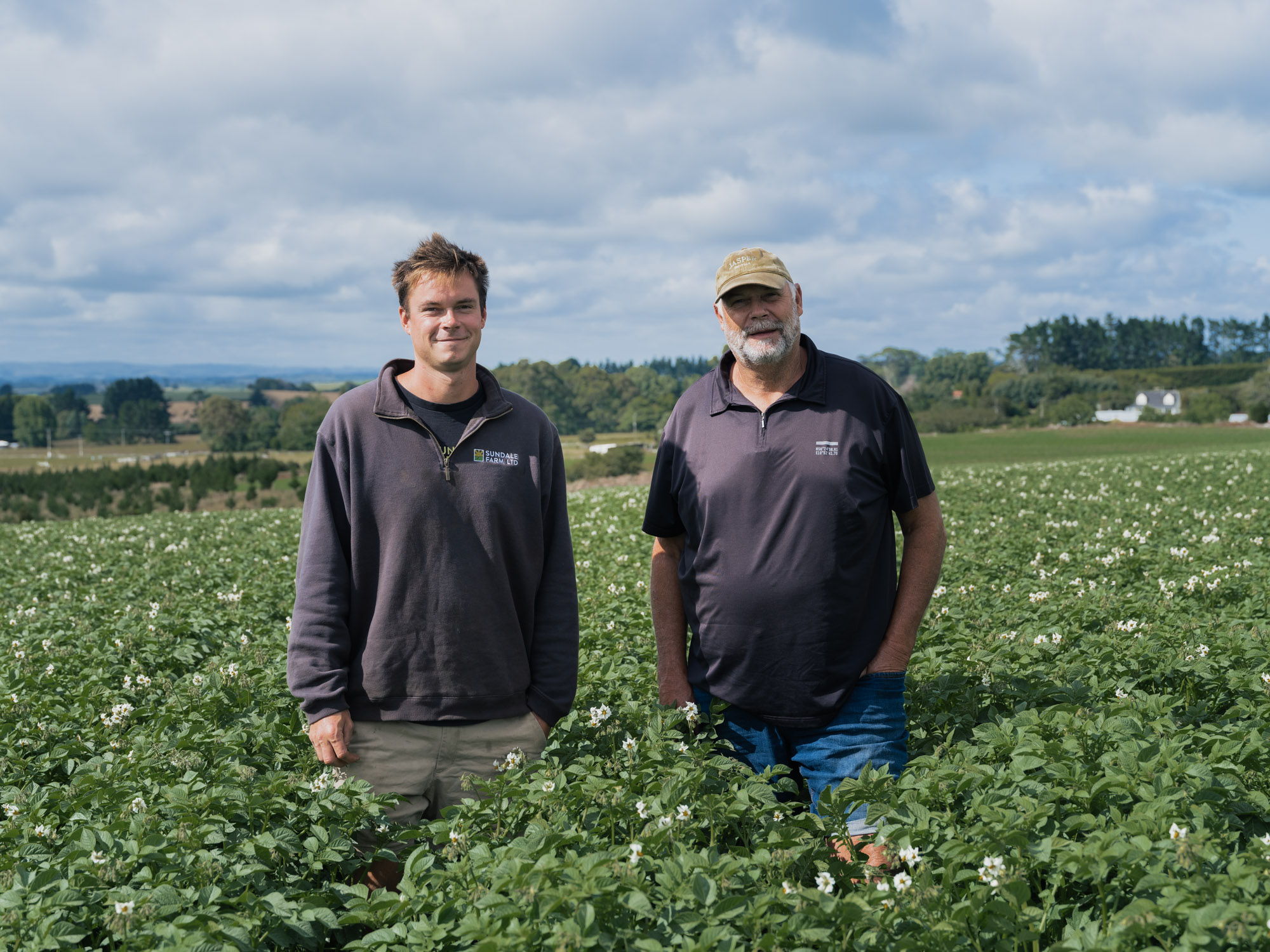
Farm manager Hunter Aarts is the third generation to carry that responsibility. “We were founded in 1963 by my grandad Frank and his brother Bert Aarts,” he said. What began as a small market garden has grown steadily, driven by opportunity and careful decision-making rather than rapid expansion.
In the early years, Sundale Farm operated from a 30-acre block growing cabbage and caulifl ower. As demand grew, the family expanded up the road and into new crops, adding onions and potatoes and building the foundations of today’s business. The next generation stepped in early, with Hunter’s father Murray and uncle Peter leaving school to commit full-time to the farm.
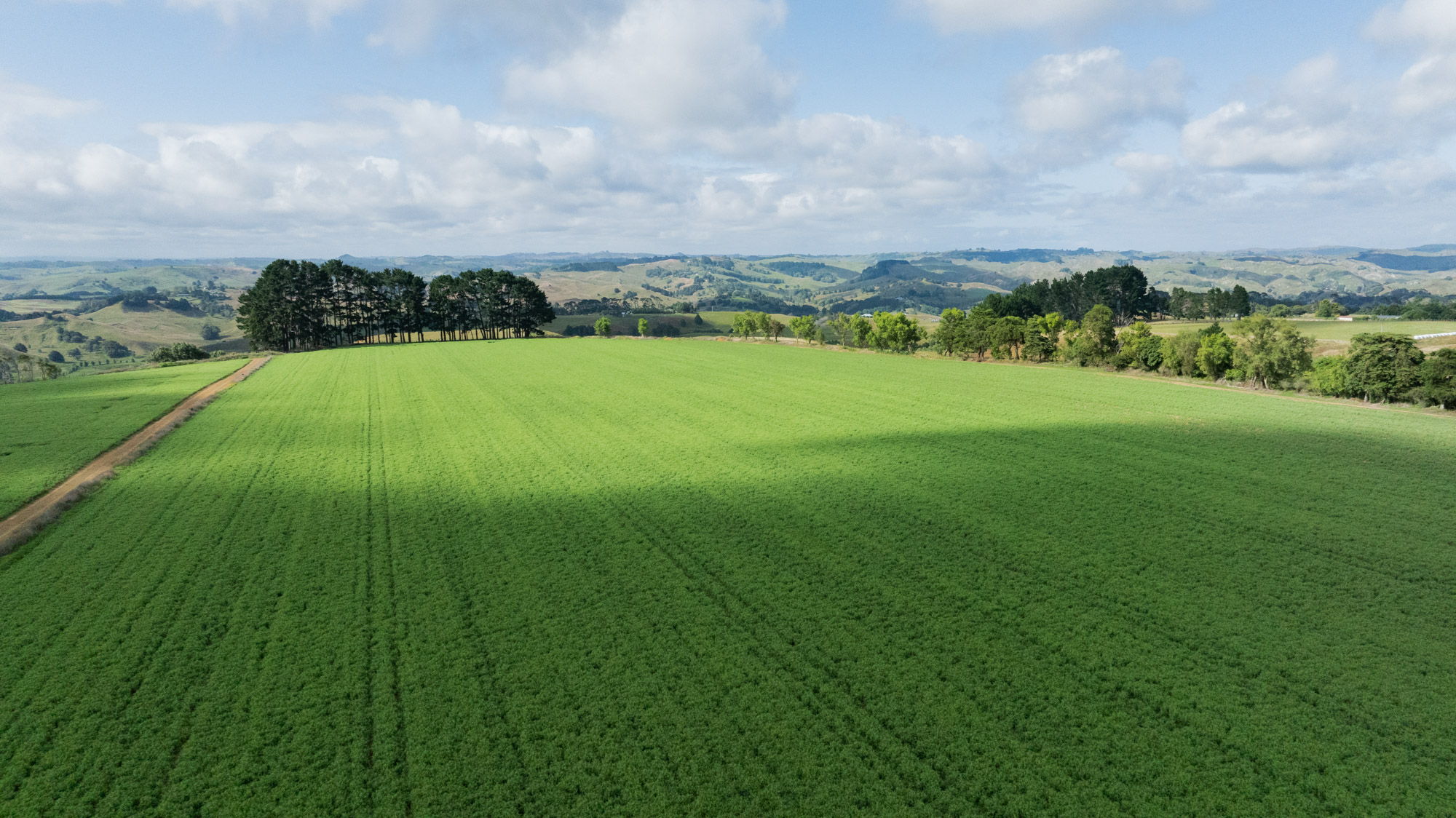
Today, Sundale Farm grows potatoes, broccoli and barley, alongside onions produced on rotation by another grower. The crop mix is deliberate, chosen to suit soil types and seasonal timing rather than market trends. The farm consists of several different owned and leased pieces of land, from Pukekawa, into neighbouring Pukekohe, Glenbrook and Onewhero. Rotation sits at the core of the system, helping protect soil health and maintain long-term productivity.
Potatoes remain the backbone of the operation, with the majority heading to Auckland crisping factories. “About 95% of the potatoes are going for crisping at the factories in Auckland, Bluebird and Eta,” Hunter said. Broccoli is sold through grower networks and direct to retail, while barley supplies the stock feed market.
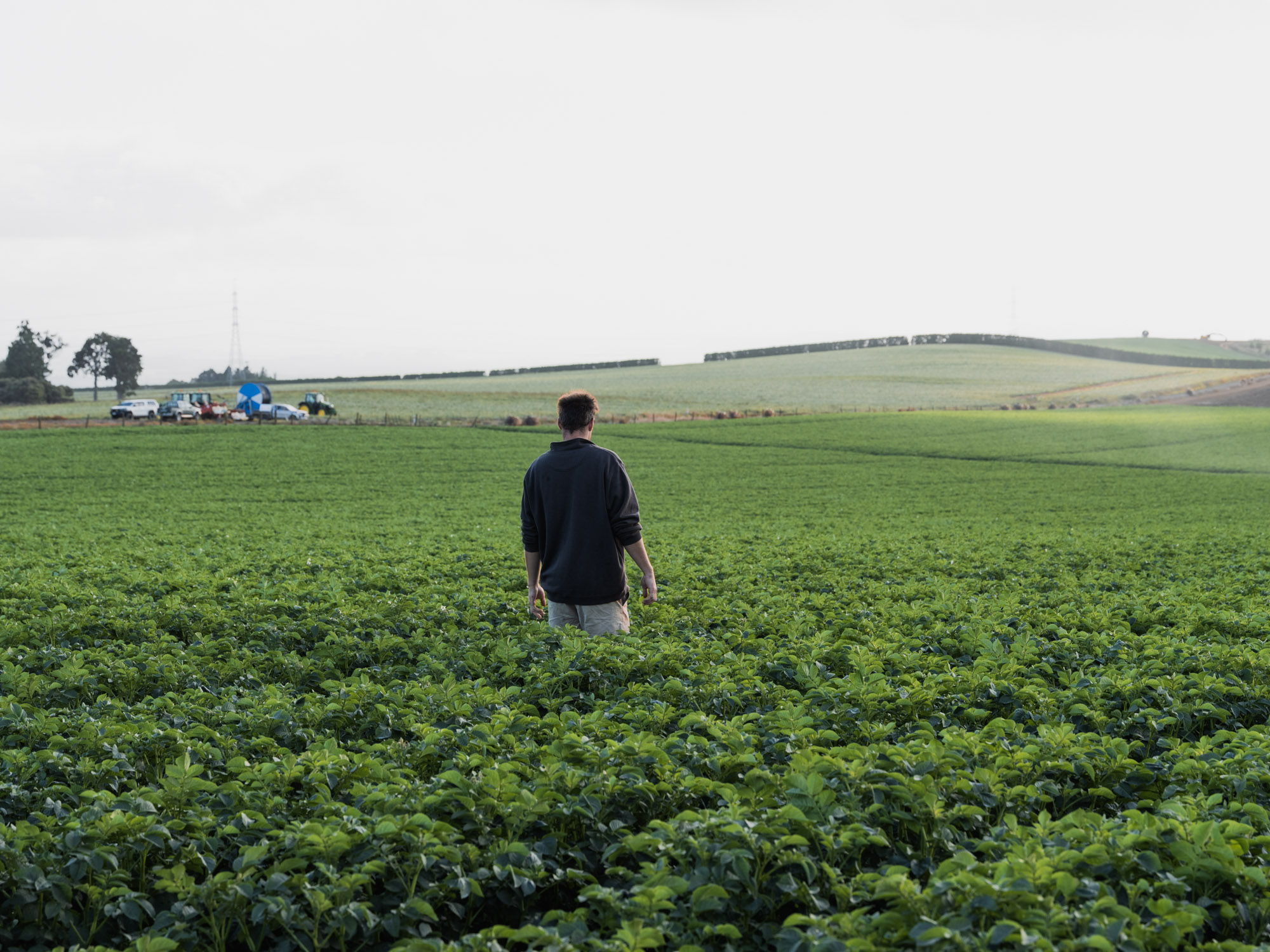
Diff erent locations are used at diff erent times of the year, depending on soil type and seasonal conditions. Lighter ground is kept for later harvests when moisture levels are higher, while heavier soils are worked earlier to avoid damage. In some paddocks, soil composition can change several times within a single fi eld, requiring constant adjustment during harvest.
“As time goes on, you slowly fi gure out what works better where, and you’re always putting pieces of the puzzle together to fit in the best way possible.”
Soil management underpins every decision on the farm. Fertiliser, organic matter and crop protection are carefully balanced, but weather remains the biggest variable. There is no set formula from one year to the next.
“There’s no blueprint for growing all these crops,” Hunter said. “Every year is completely different.”
Between harvests, the focus shifts to protecting the ground. Cover crops, including grasses, oats and mixed species, are planted to maintain structure and prevent erosion. Many paddocks are contoured, and leaving soil bare is not an option during heavy rain. “There’s always something in a field,” Hunter explained, “because when there’s heavy downpours, you need to have something growing in the soil with root mass to stop that soil washing away.”
Pukekawa and neighbouring Pukekohe’s climate and soil give Sundale Farm a signifi cant advantage. Winters are mild enough to allow year-round production, and proximity to Auckland keeps transport distances short. “Essentially, you can produce food here all year round non-stop,” Hunter said, a benefit few regions can match.
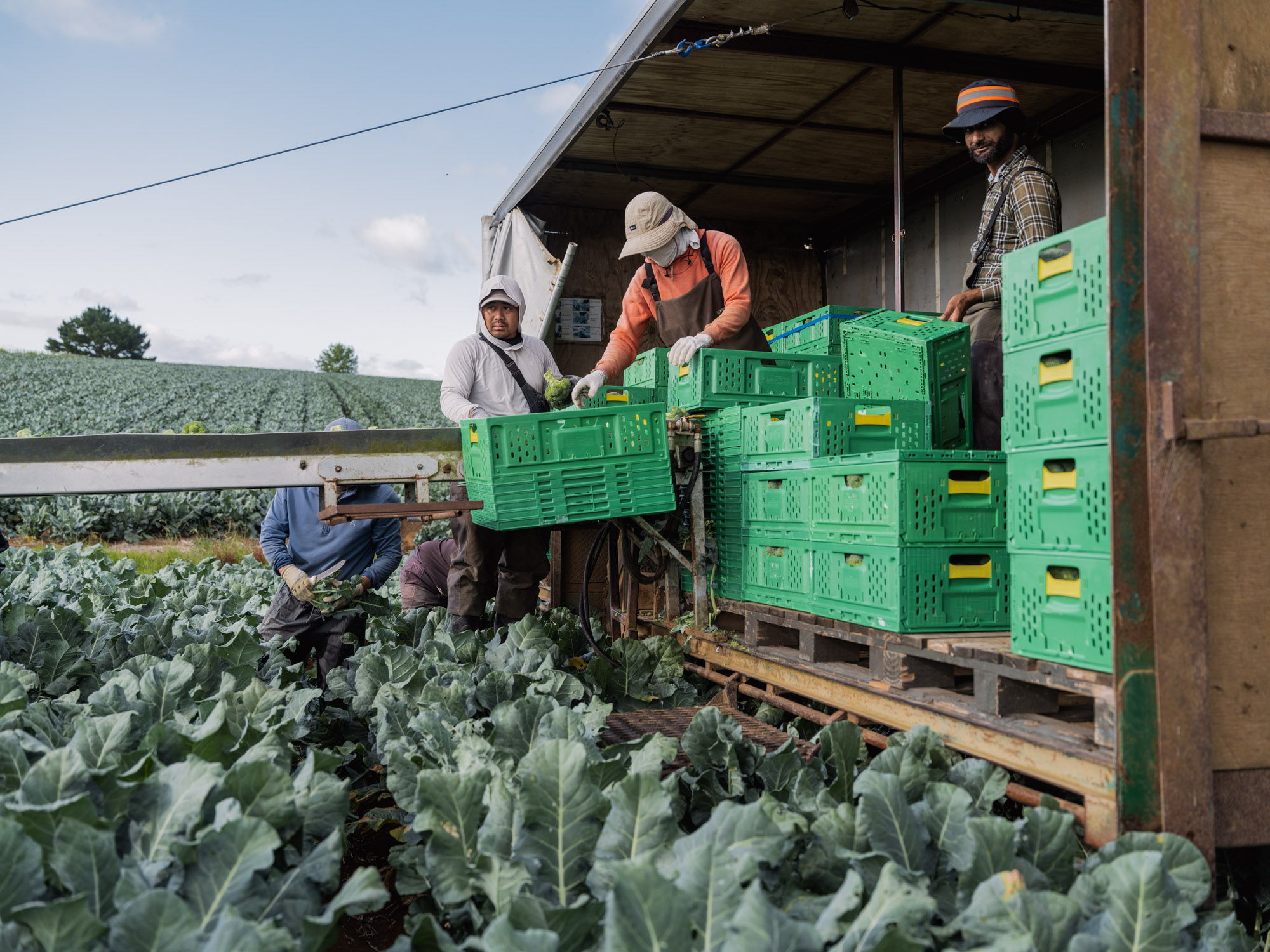
Technology is introduced where it clearly adds value. An automated sorting system has improved efficiency in the potato operation, speeding up harvest and reducing handling. Other areas remain labour-intensive by necessity. Broccoli is still cut by hand, and while new technology is emerging overseas, the business takes a cautious approach to investment. “We’ve invested in an automated sorting machine for our potato operation, and that’s allowed us to speed up our harvesting process dramatically and also reduce waste. In terms of broccoli, there’s not too much technology out there yet. We’re still cutting by hand, because it’s the only way to do it. Some machines are slowly coming out overseas, and we are looking at those seriously, but we haven’t gone for anything yet. It’s obviously a big investment, and we’re probably just going to wait and let other people figure it out first, before we get into it too early and end up with something potentially outdated as the tech evolves,” Hunter explained.
Hunter said his motivation has evolved alongside the business. “At first, I think it was the excitement of the tractors and machinery that got me into it. Now I think it’s just trying to get the best crops out of every year,” he said.
“You get humbled pretty quickly because it doesn’t always work out the way you think it’s going to, but seeing crops come out of the ground and into the shed and then selling them to customers is definitely a rewarding feeling.”
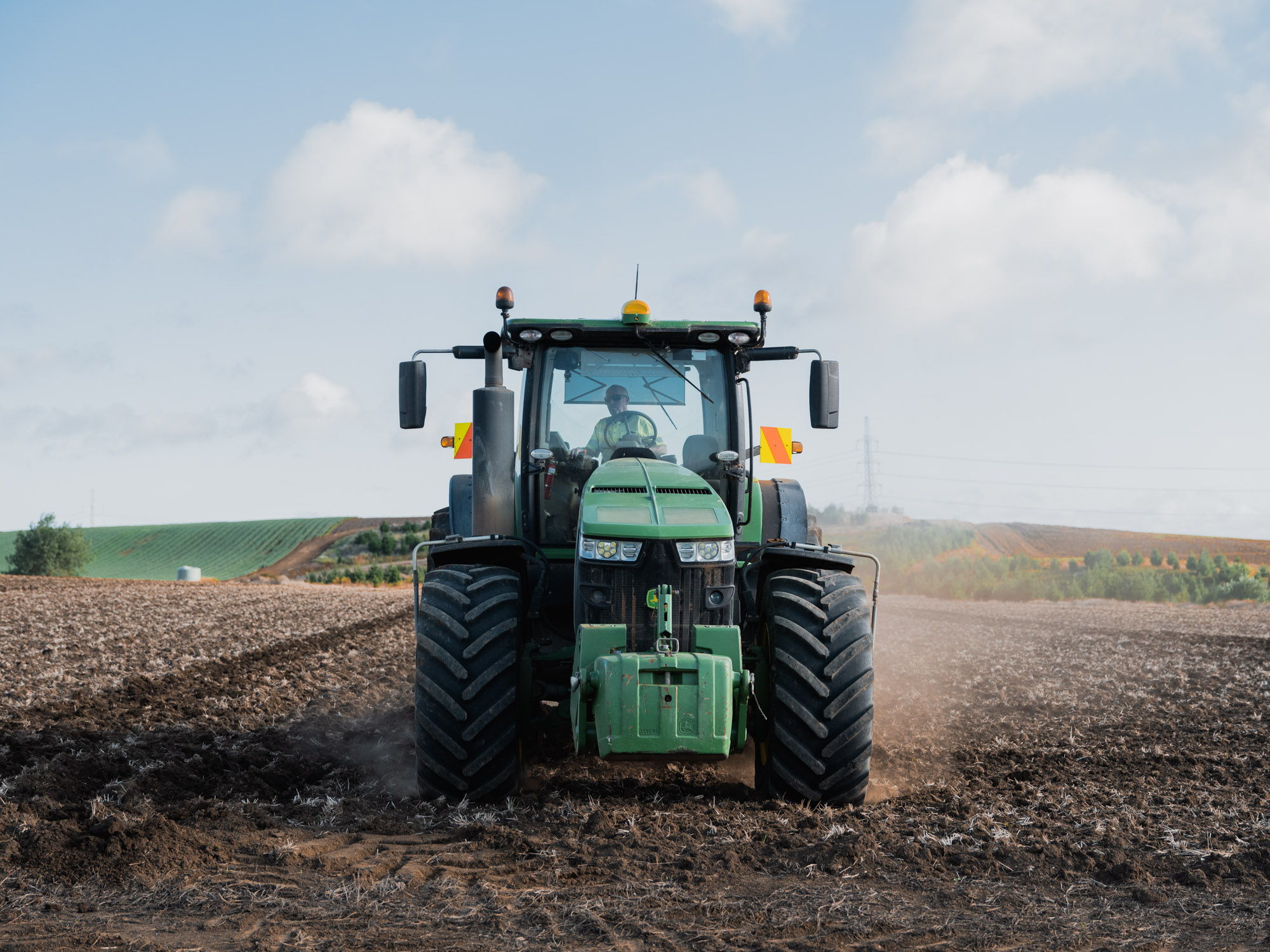
Sundale Farm employs around 25 full-time staff , and the operation relies heavily on their experience and commitment. Producing good crops is a shared effort, and the team’s contribution is not taken lightly. “The reason we produce such good crops is due to everyone pulling the same weight in the same direction,” Hunter said. “We’re fortunate to have our staff , and their work is not something we take for granted.”
Looking ahead, the focus is not on growth for growth’s sake. The goal is refinement - improving systems, maintaining soil health, and delivering consistent quality year after year. “We’re not really looking to get any bigger or any smaller,” Hunter said. “We’re just looking to get better at what we’re doing every year.”
In a region long defined by food production, Sundale Farm continues to do what it has always done: adapt to each season, learn from the land, and keep improving with every year that passes.